Refrigerator Buying Guide – Which Refrigerator is Right for Your Home?
Published 9/14/2024
Some appliances you can live without, but a refrigerator isn't one of them. Every household has one (unless you happen to own a root cellar), but if you're building a new home or need to replace your old fridge, it's time to go refrigerator shopping. Today's refrigerators come with a huge variety of options, so buying one isn't as simple as you might think. That's why we created this guide—to help you find the best refrigerator for your household!
How to choose a good refrigerator
A good refrigerator for you might be completely different for someone else. Choose a refrigerator based on your household's needs so you don't pay for features you won't use.
- First, measure how much space you have for a refrigerator or fridge-freezer combination, and decide which side you want the doors to open.
- Available space also determines the type of appliance – options range from small refrigerators with a freezer compartment to large side-by-side models.
- Smaller appliances are usually enough for 1–2 people, but if you cook a lot at home, buy in bulk, or prepare large batches at once, it's worth investing in a larger appliance even for a smaller household – if you have the kitchen space.
- You can filter our refrigerator selection by size, built-in compatibility, energy class, and noise level.
- If you're not looking for a budget solution and want to keep food fresh as long as possible, pay attention to the refrigerator's air circulation technology and different storage solutions.
- Choose a WiFi-enabled refrigerator if you want smart features that make daily life easier and save electricity.
Should you choose a separate fridge and freezer or a fridge-freezer? What about side-by-side?
The type of refrigerator, freezer, or combination you choose depends primarily on available space, but also on your needs. If you cook a lot, shop infrequently, and prepare large batches of food at once, you'll need more space. Extra freezer space is especially useful if you forage for mushrooms and berries or hunt. On the other hand, if you rarely cook at home and don't need much fridge and freezer space, there's no point paying for the electricity a larger appliance consumes.
Different refrigerator options from smallest to largest are: compact refrigerator (also available with a freezer compartment), mini fridge, fridge-freezer, side-by-side, and separate refrigerator and freezer.
Refrigerator Size, Capacity, and Door Swing – Choose the Right Size for Your Needs
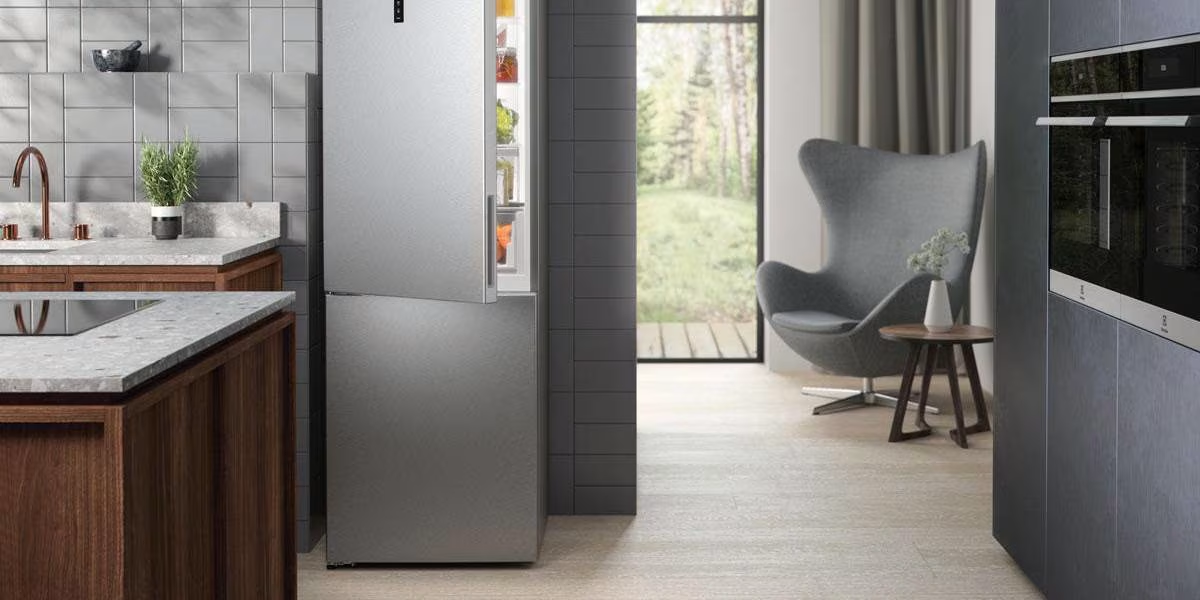
Start by measuring how much space you have available. This will narrow down your options considerably. It's also important to determine early on which side you want the refrigerator door to open from. Most refrigerators have reversible doors, but not all do. You should also consider the refrigerator's capacity. Generally, the larger the household, the more spacious the refrigerator should be. That said, even a larger household can easily manage with a smaller refrigerator if you don't cook much at home and shop in smaller batches. Conversely, even a two-person household might need a more spacious refrigerator if you cook frequently and tend to buy a week's worth of groceries at once or meal prep—preparing large quantities of food in one day to make weekdays easier.
In Summary:
- For 1–2 people, a compact or medium-sized refrigerator is usually sufficient, unless you cook a lot at home, shop infrequently, or prepare large batches of food at once.
- For families with children, it's generally best to choose the largest refrigerator your space allows.
- For avid home cooks, extra space is often more useful than premium features.
At Verkkokauppa.com, you can use filters to narrow down the refrigerator selection by width, height, capacity, and whether the door swing is reversible.
Integrated Refrigerator and Freezer
An integrated refrigerator, freezer, or fridge-freezer has a cabinet door installed on the front, allowing the appliance to blend seamlessly with the rest of your kitchen. From the outside, an integrated appliance looks just like any other kitchen cabinet, which particularly appeals to those who value aesthetics. Integrated appliances are now a very common choice. However, standard freestanding appliances are more affordable than integrated models, so they're still widely purchased, especially for rental properties.
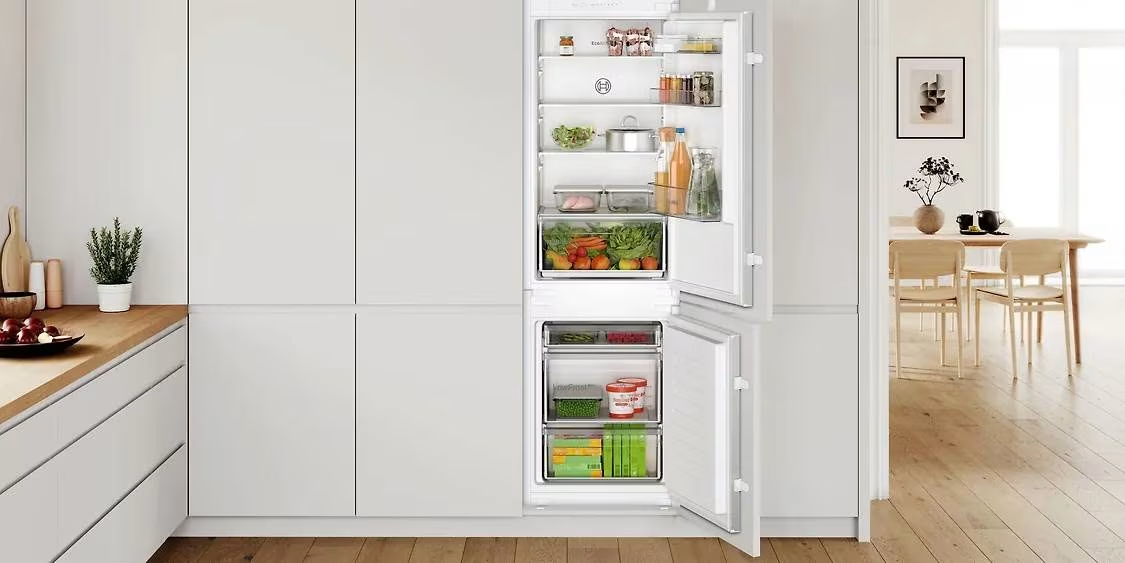
You can get integrated full-height refrigerators, freezers, and fridge-freezers. Refrigerators with freezer compartments, French door refrigerators, or side-by-side models are typically not available as integrated units.
Note! The cabinet door for an integrated appliance is not included with the appliance.
Key Refrigerator Features – Storage Solutions and Useful Extras
The main job of a refrigerator is to keep its contents at the desired temperature, and even the simplest fridge does that. When choosing a refrigerator, focus primarily on its storage solutions and practicality to ensure it best serves your household's needs. Then there are useful extras you can get by paying a bit more.
Refrigerator Storage Solutions and Practicality
Refrigerators can differ significantly in their storage solutions, and the usable space isn't determined solely by liter capacity—it's about how well the interior is designed. That's why it's important to consider what storage options matter most to you and make your choice accordingly.
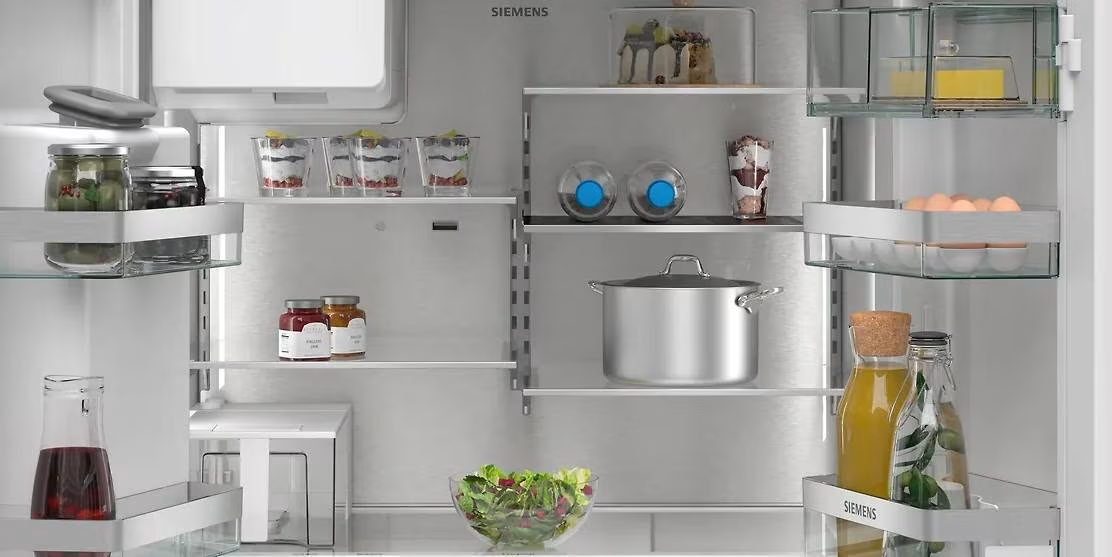
When choosing a refrigerator, consider these storage solutions based on your needs:
- Adjustable shelves. Most refrigerators have shelves that can be moved to some extent so you can organize your fridge according to your needs, but there can be differences in how many height positions are available. Also check whether the door compartments are adjustable.
- Bottle shelves and racks. If you store a lot of bottles in your fridge, it may be worth considering one with a dedicated bottle shelf or rack.
- Crisper drawer size: If dietary guidelines are to be believed, everyone should have plenty of space for vegetables in their fridge and prioritize crisper drawer size when choosing. However, if you don't use many vegetables or consume them in other forms, a smaller crisper drawer works fine and that space can be used for something more practical.
Refrigerator Air Circulation – Good Air Circulation Affects Food Freshness and Daily Convenience
A refrigerator's air circulation technology matters for both food preservation and usability.
Budget refrigerators have static cooling, meaning they don't have a separate fan or ventilator to circulate air efficiently. In these traditional refrigerators, the most perishable items should be placed in the lower section, as cold air sinks and the bottom shelves are coldest. The crisper drawer, however, is designed to be more humid and slightly warmer to ensure optimal vegetable preservation. If the product specifications don't mention air circulation, it likely has static cooling.
Mid-range and higher-end refrigerators most likely have some form of dynamic cooling or fan-assisted cooling, which circulates air evenly throughout the refrigerator so the temperature stays consistent on all shelves and you don't have to think about where to store different foods. Different manufacturers use different names for this, such as Multi Air Flow, DynaCool, MultiFlow, and PowerCooling. The downside of fan-assisted cooling is that it can dry out unwrapped foods slightly faster. That's why many models feature humidity-controlled crisper drawers, where you can adjust the internal humidity with a small slider or vent. Different produce thrives at different humidity levels, so these controls let you create optimal storage conditions for fruits and vegetables. Simply put, leafy greens and salads need more humidity than fruits, for example.
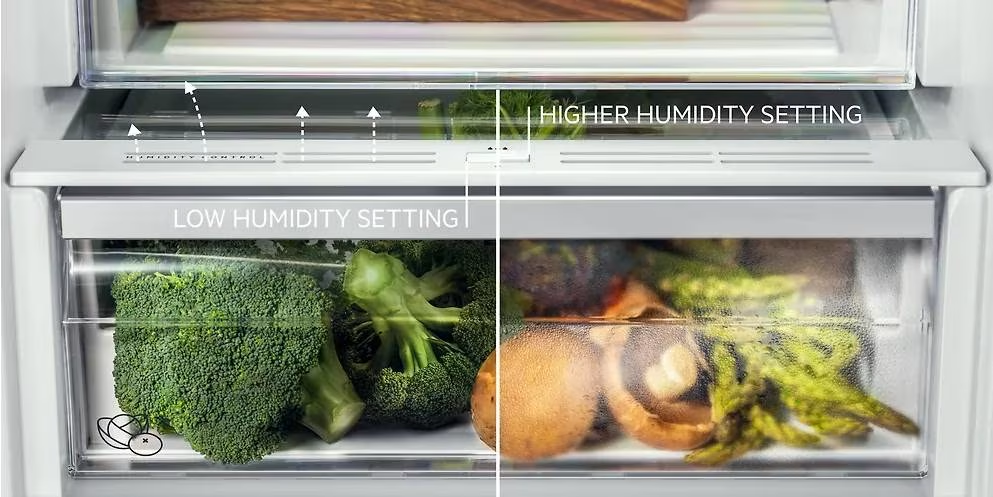
In fridge-freezers, the drying effect of fan-assisted cooling can be managed with separate air circulation for the fridge and freezer. When air doesn't transfer between the fridge and freezer, the fridge retains moisture better. Manufacturers use names like DuplexCool, DualCooling, and TwinTech for separate air circulation technologies.
Useful Refrigerator Extras
Beyond storage solutions, consider whether these additional features would be useful in your household:
- Quick cooling. When you unpack groceries into the fridge, you can temporarily lower the temperature so the new items cool faster and the temperature of food already in the fridge doesn't rise.
- Separate temperature zones. You can adjust the temperature of different zones in the fridge so each type of food has the most optimal temperature. This helps food stay fresh longer and reduces food waste.
- Door alarm. The refrigerator alerts you with a sound, for example, if the door has been left open for an extended period. This prevents food from warming up and keeps the fridge from wasting energy unnecessarily. This can be a useful feature in households with children, where accidents happen more easily.
Ice and Water Dispenser
An ice and water dispenser is by no means essential, but it does add a touch of luxury to daily life—cold water always available and ice cubes for drinks. Ice and water dispensers are found in side-by-side refrigerators and so-called French door models. Keep in mind that they can take up some interior space and the ice maker may increase maintenance needs, such as filter changes. Water and ice dispensers are available in two configurations: connected to a fixed water line or with a refillable water tank.
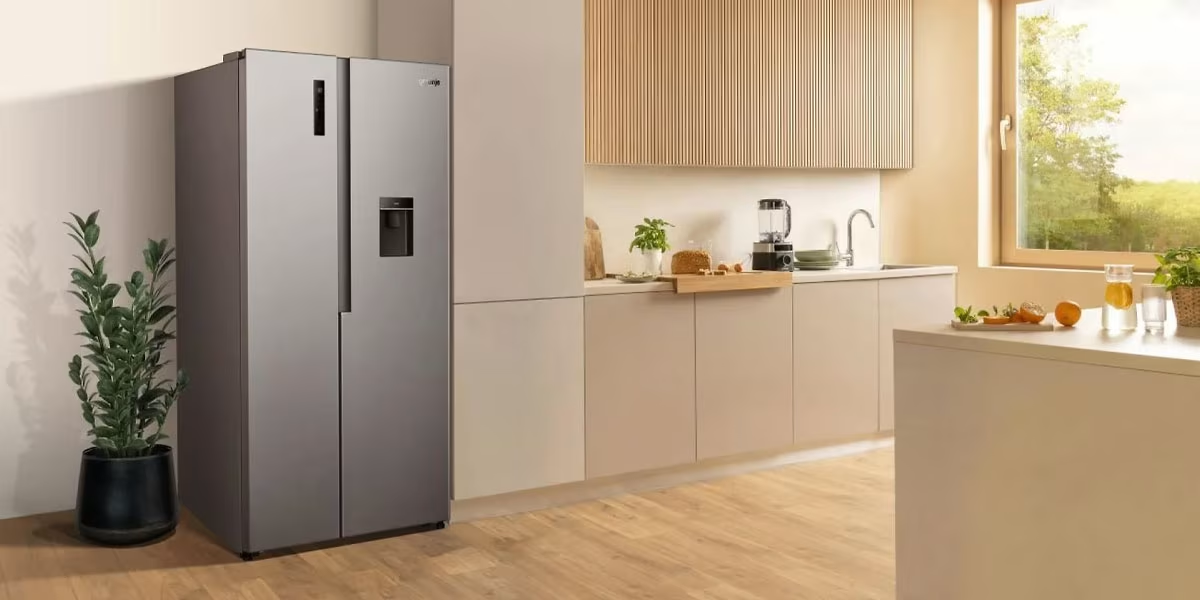
Fixed Water Connection
- The appliance connects to a fixed water line.
- No need to remember to refill a tank—cold water and ice are always available.
- Requires a water connection near the appliance.
- Generally more expensive than models with a refillable water tank.
- May require professional installation.
Refillable Water Tank
- The water tank is filled manually and supplies water to both the ice maker and water dispenser.
- Offers more flexibility in placement since it doesn't require a nearby water connection.
- Generally a more affordable option than models with a fixed water line connection.
- No separate installation work required.
What Makes a Good Freezer? Key Features to Consider When Choosing a Freezer
In practice, standalone freezers come in two types: upright freezers and chest freezers. Upright models are more common, while chest freezers are typically purchased as additional storage when space allows—especially if you enjoy mushroom foraging, berry picking, or hunting. Whether you choose an upright freezer, chest freezer, or refrigerator-freezer combo, there are certain features worth paying attention to. Chest freezers often have somewhat simpler features compared to upright models.
Key Freezer Features
- Star rating indicates how cold the freezer compartment can get and what it's suitable for. With full-size freezers, this usually isn't a concern, but if you're looking at a freezer compartment or the smaller freezer section of a refrigerator-freezer, make sure the star rating meets your needs. Ratings range from one to four stars—a one-star freezer is suitable for short-term storage, while a four-star model can handle long-term storage of even fresh foods.
- Defrost technology is one of the most important selection criteria. Budget-friendly freezers typically have manual defrost, meaning you'll need to defrost the unit yourself once frost builds up over time. No Frost technology, on the other hand, automatically prevents frost formation, so you can skip the defrosting hassle.
- Fast freeze or Super Freeze rapidly lowers the temperature, allowing fresh foods to freeze faster and better retain their texture and nutritional value.
- Air circulation technology is important in freezers as well as refrigerators, since fan-assisted freezing maintains an even temperature throughout the unit.
- Temperature alarm alerts you if the freezer temperature rises too high—for example, if the door has been left open.
- If you're storing your freezer in a cold space, choose a cold-resistant model. Our selection includes many options that can withstand temperatures as low as –15°C.
- If you need flexibility, choose a freezer that's convertible to a refrigerator.
Smart Features in Freezers and Refrigerators
Beyond the essential features, some refrigerators and freezers offer various smart capabilities that few can honestly say they need, but which can certainly bring convenience, lower your electricity bill, and make daily life easier. You can connect a smart refrigerator or freezer to your home WiFi network and control it through a phone app. For example, you can adjust the temperature remotely, receive alerts if the door is left open, and monitor the appliance's performance and energy consumption. Some models can also notify you when maintenance is needed and assist with troubleshooting.
Freezer and Refrigerator Noise Level – How Quiet Should a Refrigerator Be?
Refrigerator noise level is measured in decibels (dB), and the lower the number, the quieter the appliance. Generally, refrigeration appliances are very quiet, but noise level is worth considering especially in open-plan kitchens and small apartments, particularly if you're sensitive to sound. The quietest models typically have an inverter compressor, which runs smoothly and adjusts its power as needed.
- Under 35 dB is extremely quiet.
- 35–39 dB is quiet.
- Over 40 dB may be noticeably audible in a quiet space.
If noise level is an important purchasing criterion, check the product specifications or the energy label for the decibel rating to ensure it's suitable for your situation.
Power consumption and energy efficiency of freezers and refrigerators – how much electricity does a refrigerator use?
Since refrigeration appliances run continuously year-round, you can't reduce energy consumption by using them less frequently. On the bright side, modern refrigeration appliances are so energy-efficient that their year-round operation barely impacts your wallet. However, if you want the most energy-efficient refrigerator possible, the appliance's energy class (A–G) and annual consumption (kWh/year) tell you how much electricity it uses – the closer to class A, the cheaper the appliance is to run. Keep in mind, though, that a larger refrigerator may consume more electricity than a smaller one even with the same energy class, so it's worth comparing both the energy class and the actual annual consumption.
Read here how to interpret energy labels for refrigeration appliances and how you can calculate electricity consumption in euros. You can also read our experts' tips for saving energy when storing food.
Refrigerator Comparison – Differences Across Price Ranges
What do you get when you pay more for a refrigerator or fridge-freezer? All refrigerators handle their basic function perfectly well, so you can confidently buy even the most affordable model and it will keep your food cold. Budget refrigerators are typically small or medium-sized and very simple – you're not paying for unnecessary features.
When you pay more, you get additional size options, such as side-by-side and French door models, built-in compatibility, quieter operation, better energy efficiency, more advanced cooling technology, and improved storage solutions that help food stay fresh longer. Invest even more and you can get smart features and premium options like water and ice dispensers – not exactly essential, but they can make daily life easier and add a touch of luxury.
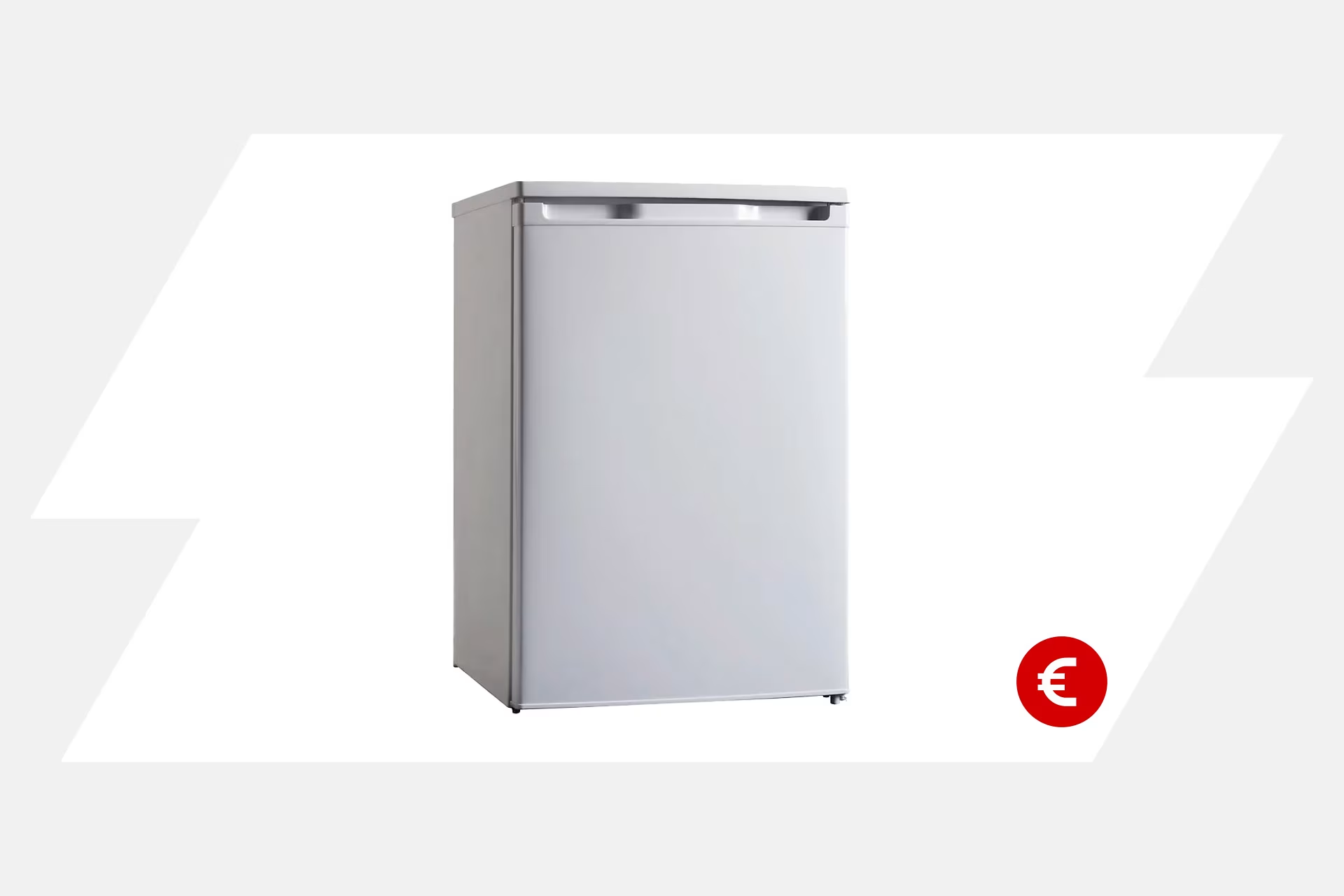
Budget Refrigerator
Price Range: under €500
Who is it for? One- or two-person households, cabins, as a second fridge, and student apartments.
Typical Features:
- Model Options in This Price Range: Compact refrigerator with freezer compartment, American-style fridge, full-height refrigerator, and fridge-freezer.
- Capacity: Small or medium-sized.
- Air Circulation: Often static cooling, meaning food placement has a greater impact on freshness.
- Energy Class: Usually E
- Features: Basic refrigerator without additional or smart features.
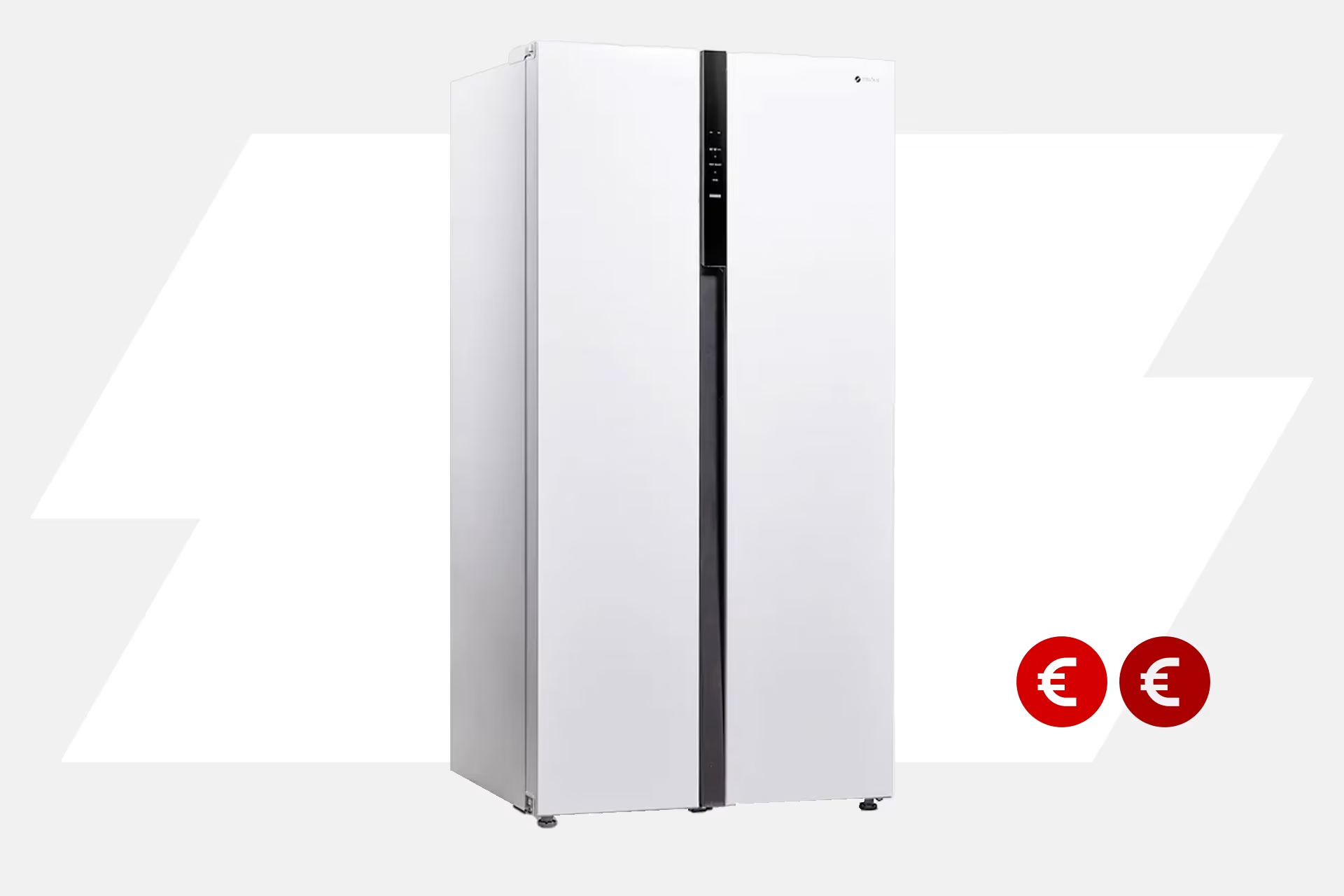
Mid-Range Refrigerators
Price Range: €500–1,000
Who is it for? Couples and families who need ample cold storage space and features that make everyday life easier.
Typical Features:
- Model options in this price range: Full-height refrigerators and fridge-freezers, including built-in models, side-by-side, and French door.
- Capacity: Medium to very large.
- Air circulation: Static cooling or fan cooling for more even air distribution.
- Energy class: Typically C–E
- Features: More spacious, quieter, and more energy-efficient refrigerators with convenient or smart features. The freezer may include automatic defrost.
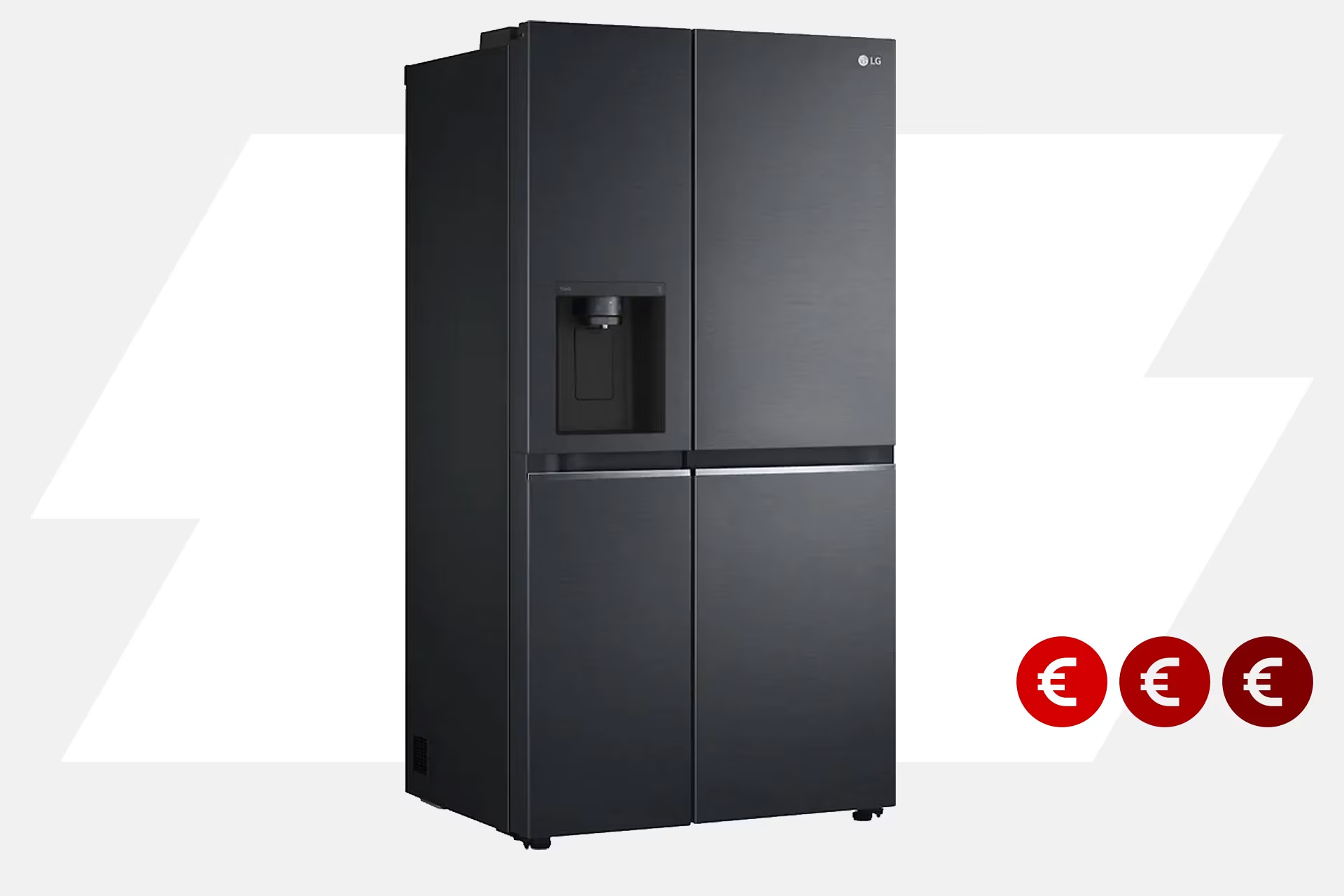
Premium Refrigerator
Price range: over €1,000
Who is it for? Large households, those who store lots of food, and anyone who values premium features and design.
Typical features:
- Model options in this price range: Full-height refrigerators and fridge-freezers, including built-in models, side-by-side, and French door.
- Capacity: Medium to very large.
- Air circulation: Usually fan-cooled for more even air distribution.
- Energy class: Typically C–E
- Features: More spacious, quieter, and more energy-efficient refrigerators with convenient smart and premium features. Freezers typically include automatic defrost.
Installing a Freezer or Refrigerator
You can install a standard refrigerator that doesn't require a water connection yourself, but it's easier to have professionals handle the installation. At Verkkokauppa.com, you can order your cooling appliance with installation and, if needed, old appliance recycling.
If you're installing the refrigerator or freezer yourself, follow these steps:
- Place a suitable drip tray under the cooling appliance.
- Check the refrigerator or freezer manufacturer's recommended minimum clearances from walls and cabinets to ensure proper ventilation.
- Adjust the appliance's feet so it's level—make sure the door closes properly and the unit doesn't wobble.
- If the appliance's door swing is reversible, install the door and handle so it opens in the most practical direction for your kitchen.
- Plug the appliance into an outlet and verify that it starts working.
If you order a refrigerator or freezer from Verkkokauppa.com with installation, here's how it works:
- You can order installation for a refrigerator, freezer, or Side By Side unit. If you order both a separate refrigerator and freezer, you'll need to order installation service for each.
- Installation cannot be performed without a drip tray. If you're replacing an old appliance with a new one of the same size, the old drip tray will work as long as it's intact.
- The installers will disconnect your old appliance if needed, unpack the new one and recycle the packaging materials, position the appliance, level it, plug it in, and test its operation. You'll also receive an installation report.
- Please note that the installation service doesn't include door swing reversal, cabinet modifications, installing cabinet panels for integrated appliances, or connecting water lines.
- If your cooling appliance has a reversible door swing, door reversal may be available for an additional fee from the delivery company.
- If you wish, you can also order old appliance recycling separately, and the delivery company will take your old appliance when they leave.
Frequently asked questions about choosing a refrigerator
Give us feedback – was this article helpful?
We’d love to hear from you! Rate this article on a scale of 1–5 and let us know how we could make it even better.
Give feedback (Ulkoinen palvelu) (Avautuu uuteen välilehteen)