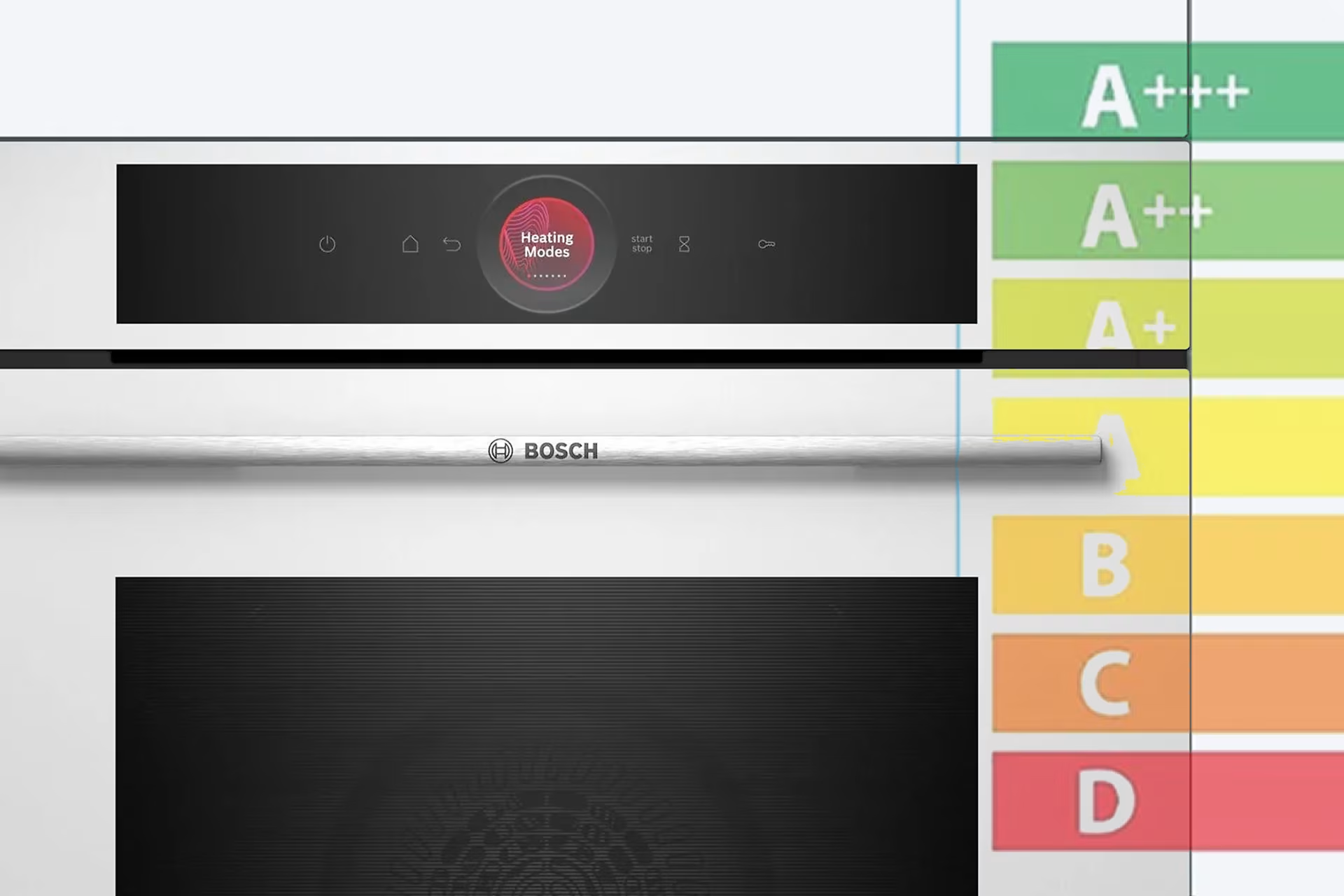
Energy labels for home electronics help consumers compare energy consumption
Updated August 20, 2026
The purpose of the European Union energy label is to help compare the energy consumption of electrical appliances. Energy labels make it easier to understand how much energy each appliance uses, so you can choose more energy-efficient devices for your home and save on your electricity bill.
New energy label simplifies comparison
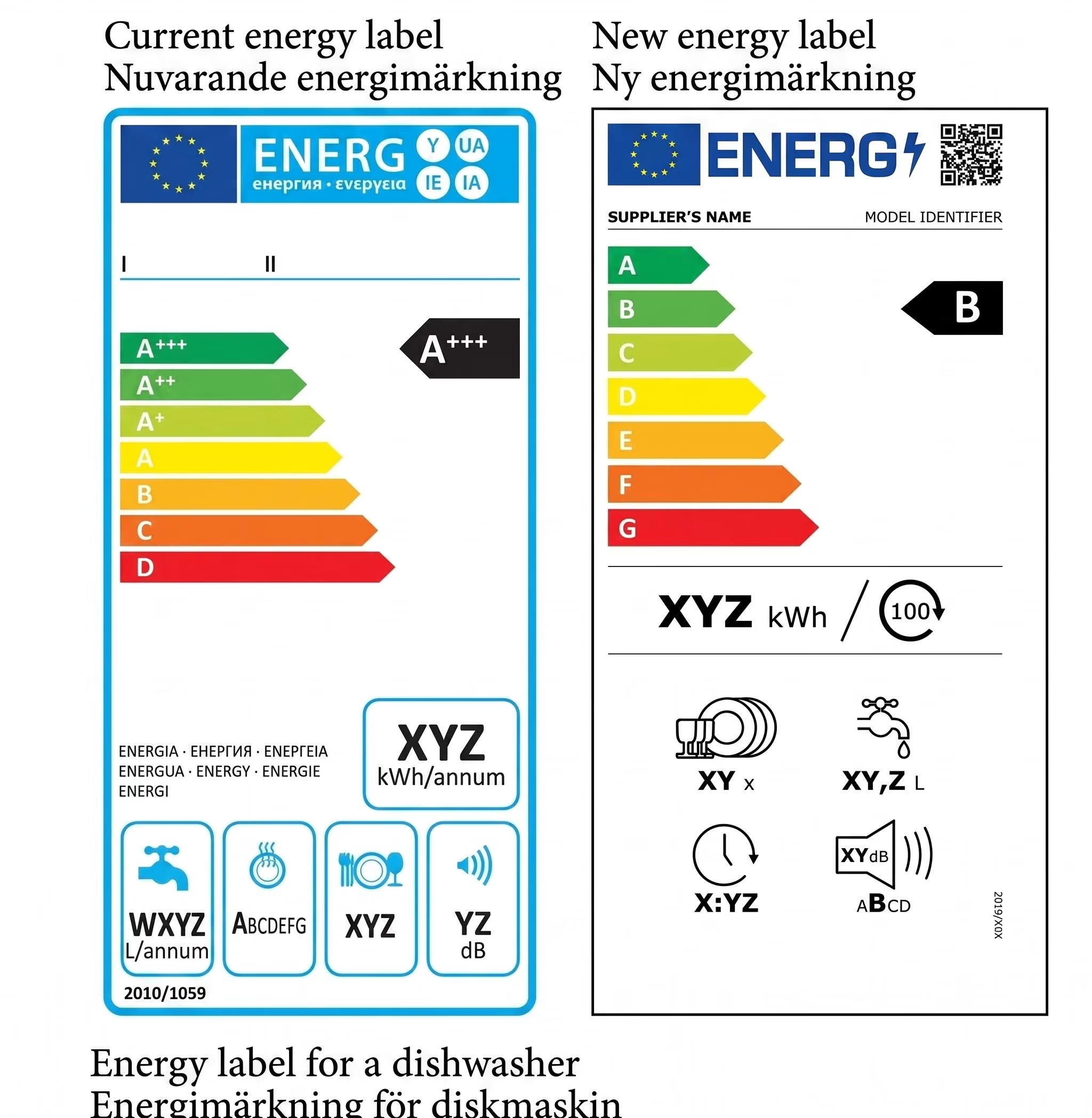
Energy labels were updated on March 1, 2021 for some home electronics, with the rest to be updated in the coming years. During the transition period lasting several years, both old and new energy labels will be used. The updated energy labels were first introduced for refrigerators and freezers, dishwashers, washing machines, washer-dryers, wine coolers, and televisions and displays. Note that the formula behind the energy class has been updated, so old and new labels are not directly comparable.
How did the energy label change?
In recent years, more and more appliances have received A+, A++, and A+++ energy ratings as energy efficiency has improved. The plus classes made comparisons more difficult and removed manufacturers' incentive to improve product energy efficiency, which is why the gradual phase-out of plus classes began in 2021.
New Energy Label Scale
The new energy labeling system returns to the green-to-red A–G scale, where A-class products are the most energy-efficient and G-class products are the least energy-efficient. After rescaling, the most efficient products currently available will initially be in energy class B or C, leaving room for new innovations and the development of even more energy-efficient products.
Features to Help Your Purchase Decision and QR Code
Energy labels now also provide other helpful information depending on the product, such as water consumption, program duration, and noise level.
New energy labels also include a QR code. By scanning the code, you can access additional product information directly from the EPREL product database.
Read frequently asked questions here (Ulkoinen palvelu) (Avautuu uuteen välilehteen)
How to read energy labels
Energy labels can seem confusing at first glance. We want to help you understand them so you can find the right home appliances for your needs and budget. When it comes to energy consumption, pay attention to at least the energy efficiency rating (e.g., A-G) and the kWh value, which shows how much the appliance consumes in kilowatt-hours. Energy labels provide approximate estimates of consumption.
Refrigeration Appliances
Scale: New energy label, A–G
How the energy class is determined: The energy label shows the appliance's estimated annual energy consumption. Energy consumption is determined by measuring the appliance's power consumption at various ambient temperatures and at specified temperature levels in the appliance's compartments. Defrosting cycles and restarts are also taken into account.
Additional label information: The energy label for refrigeration appliances also shows the volume of freezer and refrigerator compartments in liters, as well as the appliance's noise level in decibels. The noise level is also classified on an A–D scale, where A is the quietest and D is the least quiet.
Example consumption: A class C fridge-freezer may consume around 150 kWh per year, while a class F fridge-freezer may consume approximately 300 kWh.
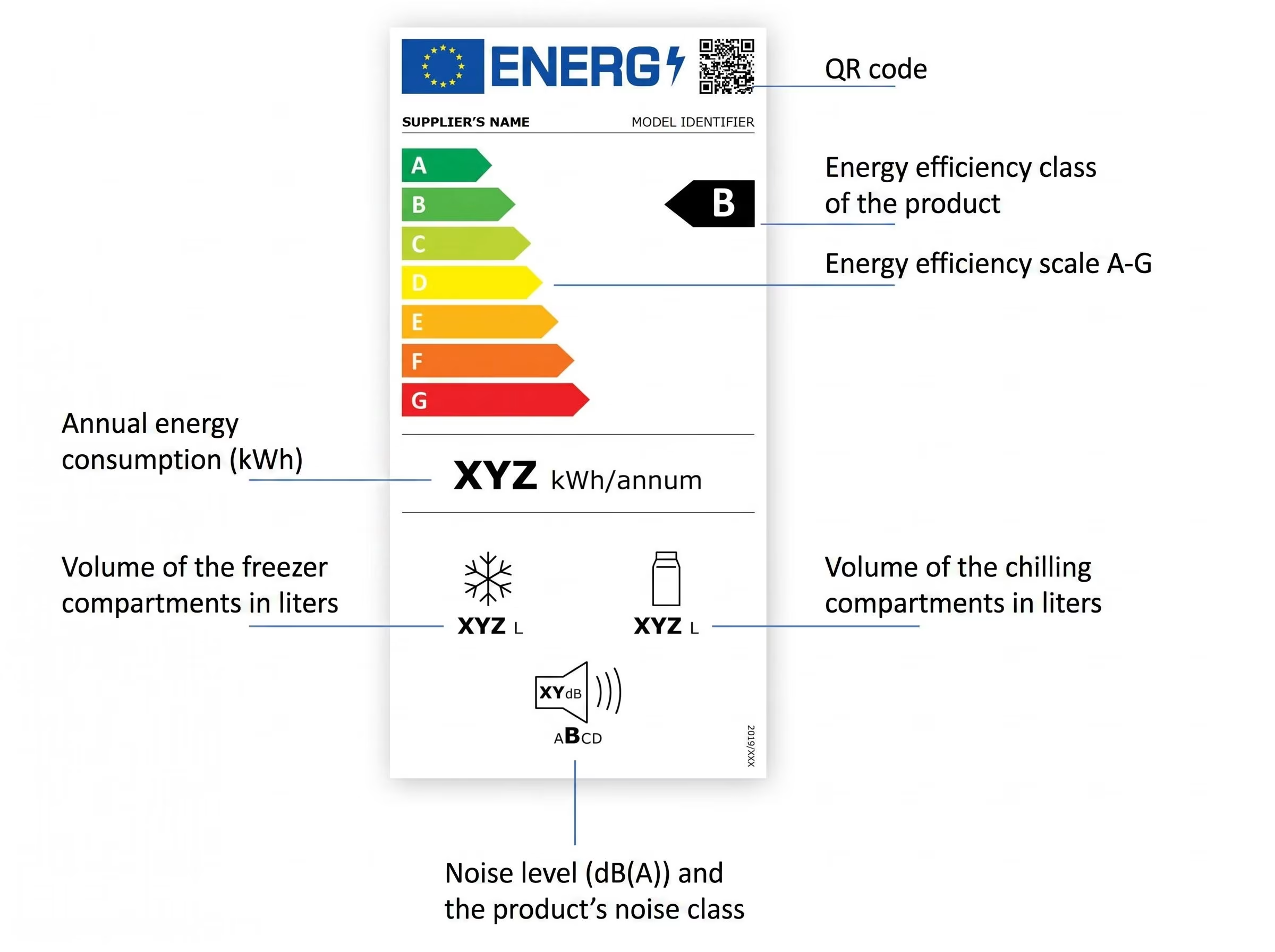
Calculate the annual cost of your refrigeration appliance: Multiply the kWh value shown on the energy label by your electricity price. For example, 150 kWh x €0.20 = €30.
Wine Coolers
Scale: New energy label, A–G
How the energy class is determined: The annual energy consumption of a wine cooler is calculated by measuring its power consumption at various ambient temperatures and at the defined temperature levels of the unit's compartments. Defrosting cycles and restarts are also taken into account.
Additional label information: The energy label for wine coolers also shows how many standard-sized wine bottles the unit can hold and the noise level in decibels. The noise level is also classified on an A–D scale, where A is the quietest and D is the least quiet.
Example consumption: A Class E wine cooler may consume around 78 kWh per year, while a Class G wine cooler's annual consumption can be as high as 150 kWh.
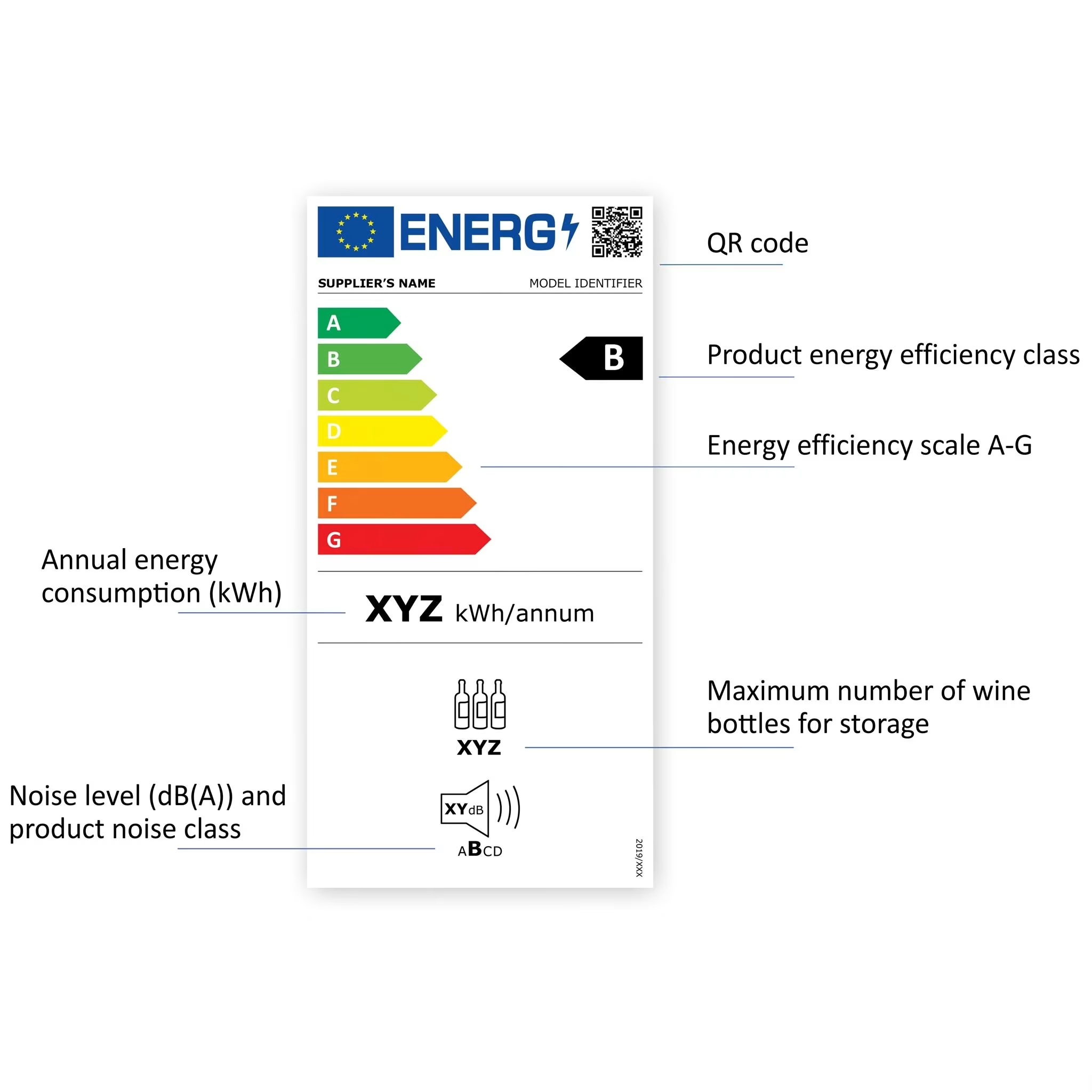
Calculate the annual cost of your wine cooler: Multiply the kWh value shown on the energy label by your electricity rate. For example, 78 kWh x €0.20 = €15.60.
Washing Machines
Scale: New energy label, A–G
How the energy class is determined: Washing machine energy consumption is calculated based on 100 wash cycles.
Additional energy label information: The washing machine energy label also shows how many kilograms of laundry can be washed using the Eco program, the duration of the Eco program and water consumption in liters, noise level in decibels, and spin efficiency class. The noise level and spin efficiency class also include their rating scales – noise level is measured on an A–D scale, where A is the quietest and D the least quiet, and spin efficiency on an A–G scale, where A-rated machines spin most efficiently and G-rated machines least efficiently.
Example consumption: A class A washing machine may consume 45 kWh/100 wash cycles, while a class F machine consumes 70 kWh per 100 uses.
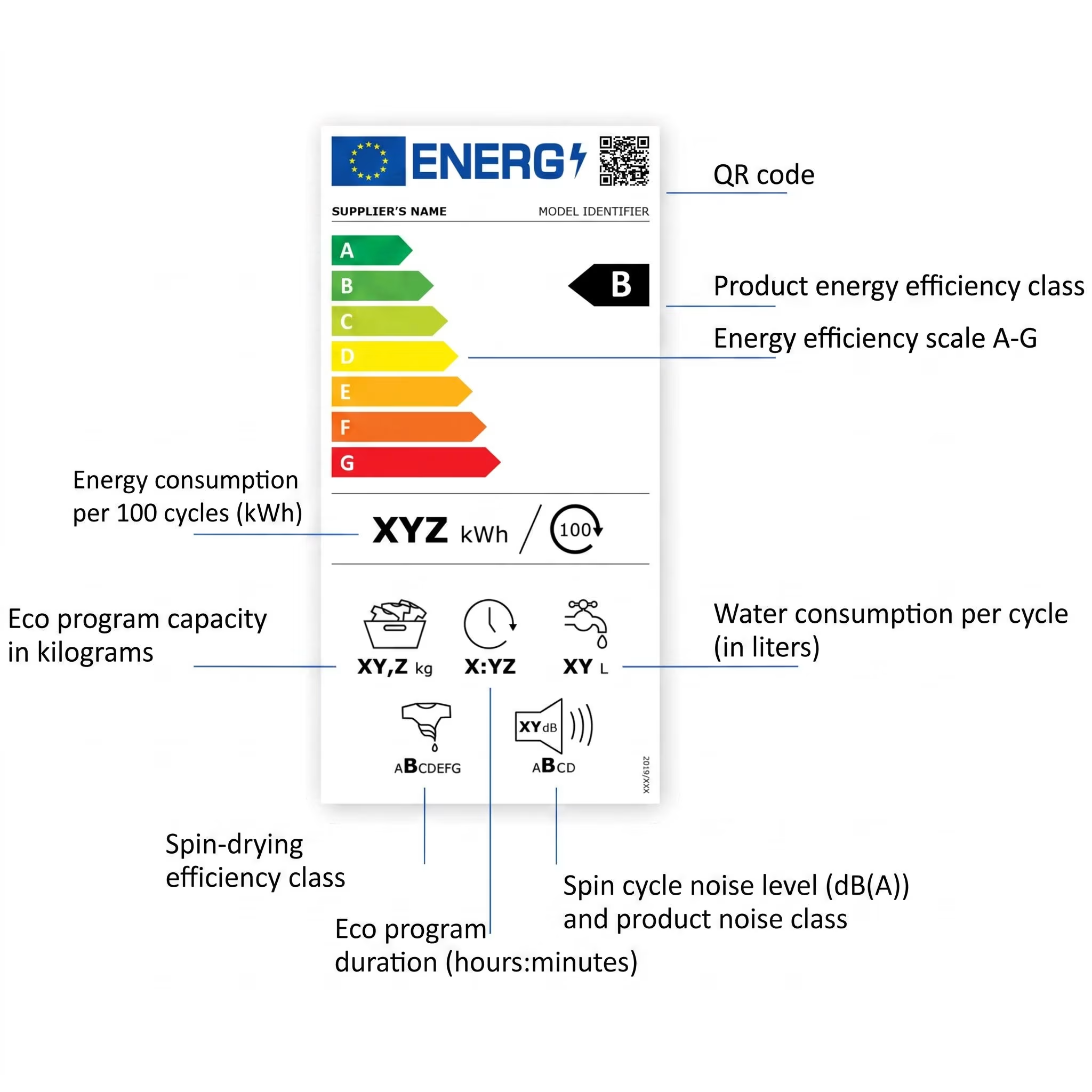
Calculate the cost of 100 wash cycles for your washing machine: Multiply the kWh value shown on the appliance's energy label by your electricity price. For example, 45 kWh x €0.20 = €9.
Washer-Dryers
Scale: New energy label, A–G
How the energy class is determined: The energy label for a washer-dryer shows the wash and dry program on the left and the wash-only program on the right, and their energy classes may differ. For both, energy consumption is calculated based on 100 uses of the Eco program.
Additional label information: When using the drying program, the machine can hold less laundry, consumes more water, and the program takes longer. The energy label shows the capacity, water consumption, and Eco program duration for both programs separately. The label also indicates the appliance's noise level in decibels, the spin efficiency rating, and their rating scales—noise level is measured on an A–D scale, where A is the quietest and D the least quiet, and spin efficiency on an A–G scale, where A-rated machines spin most efficiently and G-rated least efficiently.
Example consumption: For an A-rated washer-dryer's wash-only program, the wash and dry program may be rated C–E class, for example. A C-class wash and dry program consumes around 250 kWh, while an E-class consumes 350 kWh per 100 wash and dry program uses.
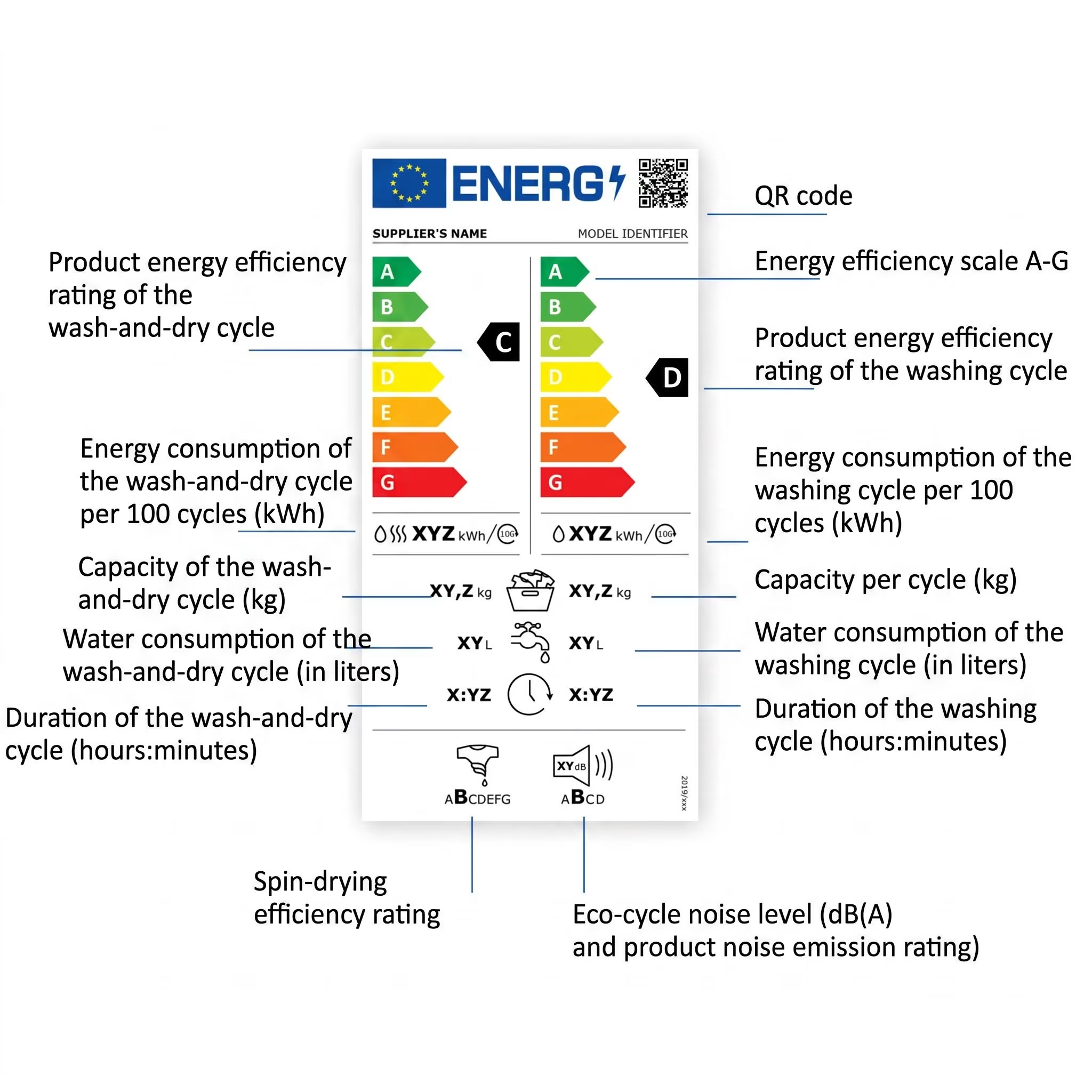
Calculate the cost of 100 wash and dry cycles for a washer-dryer: Multiply the kWh value shown on the appliance's energy label by your electricity rate. For example, 250 kWh x €0.20 = €50.
Tumble Dryers
Scale: New energy label, A–G. Since the new energy label was recently introduced for tumble dryers, models with both old and new energy labels are still available for sale.
How the energy class is determined: The energy label shows the tumble dryer's "annual energy consumption," calculated based on 100 cycles.
Additional energy label information: The tumble dryer energy label also shows its condensation efficiency class on a scale of A–D, the appliance's noise level, how many kilograms of laundry can be dried using the eco program, and how long the eco program takes with a full load.
Example consumption: Tumble dryers with the new energy label rated B may have an energy consumption of around 92 kWh, while a D-class tumble dryer may consume 145 kWh/100 cycles.
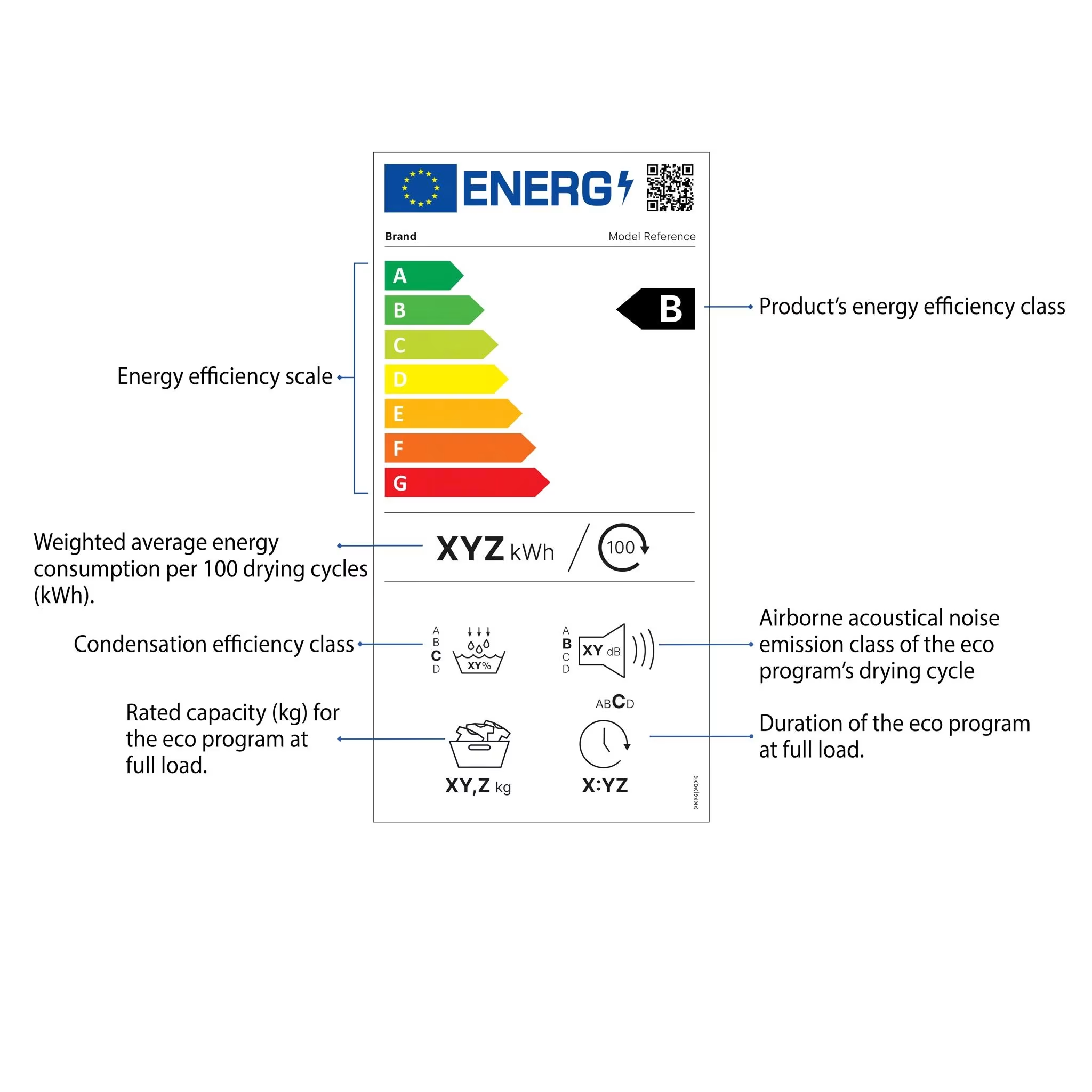
Calculate the cost of 100 cycles for your tumble dryer: Multiply the kWh value shown on the appliance's energy label by your electricity price. For example, 92 kWh x €0.20 = €18.40.
Dishwashers
Scale: New energy label, A-G
How the energy class is determined: A dishwasher's energy consumption is calculated based on 100 cycles using the Eco program.
Additional energy label information: The dishwasher energy label also shows how many place settings can be washed per cycle using the Eco program, the duration of the Eco program, water consumption in liters, and noise level in decibels. The noise level is also classified on an A-D scale, where A is the quietest and D is the least quiet.
Example consumption: A Class A dishwasher may consume 54 kWh/100 cycles, while a Class F dishwasher may consume 104 kWh per 100 cycles.
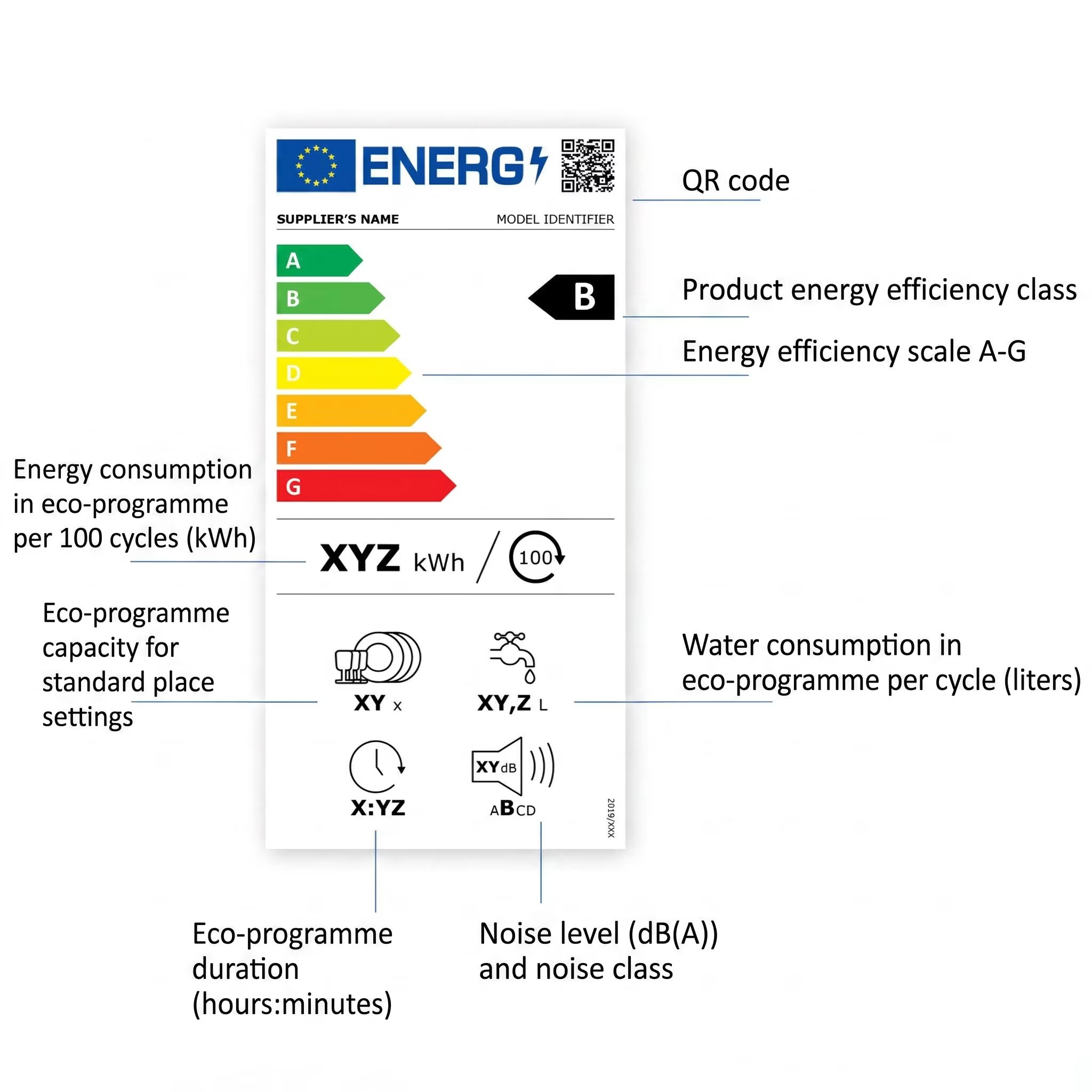
Calculate the cost of 100 cycles for your dishwasher: Multiply the kWh value shown on the appliance's energy label by your electricity price. For example, 54 kWh x €0.20 = €10.80.
TVs and Displays
Scale: New energy label, A-G
How the energy class is determined: The actual energy class for TVs and displays is determined using SDR content, meaning standard picture quality for moving images. If a TV can display HDR content, the energy label also shows the energy consumption and energy class for higher picture quality separately. In both cases, annual energy consumption is shown in kilowatt-hours per 1000 hours.
The better and brighter the picture quality of a TV, the more energy it consumes. However, picture quality has a huge impact on the viewing experience, so when buying a TV, it's worth considering what you want from it. Read more about TV energy consumption in our TV buying guide.
Additional information on the energy label: The energy label for TVs and displays also shows the visible screen diagonal in centimeters and inches, as well as the resolution in pixels.
Example consumption: A 55" 4K LED TV in energy class E can consume 64 kWh with SDR content and 123 kWh with HDR content per 1000 hours, while a G-class 8K Neo QLED TV of the same size can consume 193 kWh with SDR content and 269 kWh with HDR content per 1000 hours.
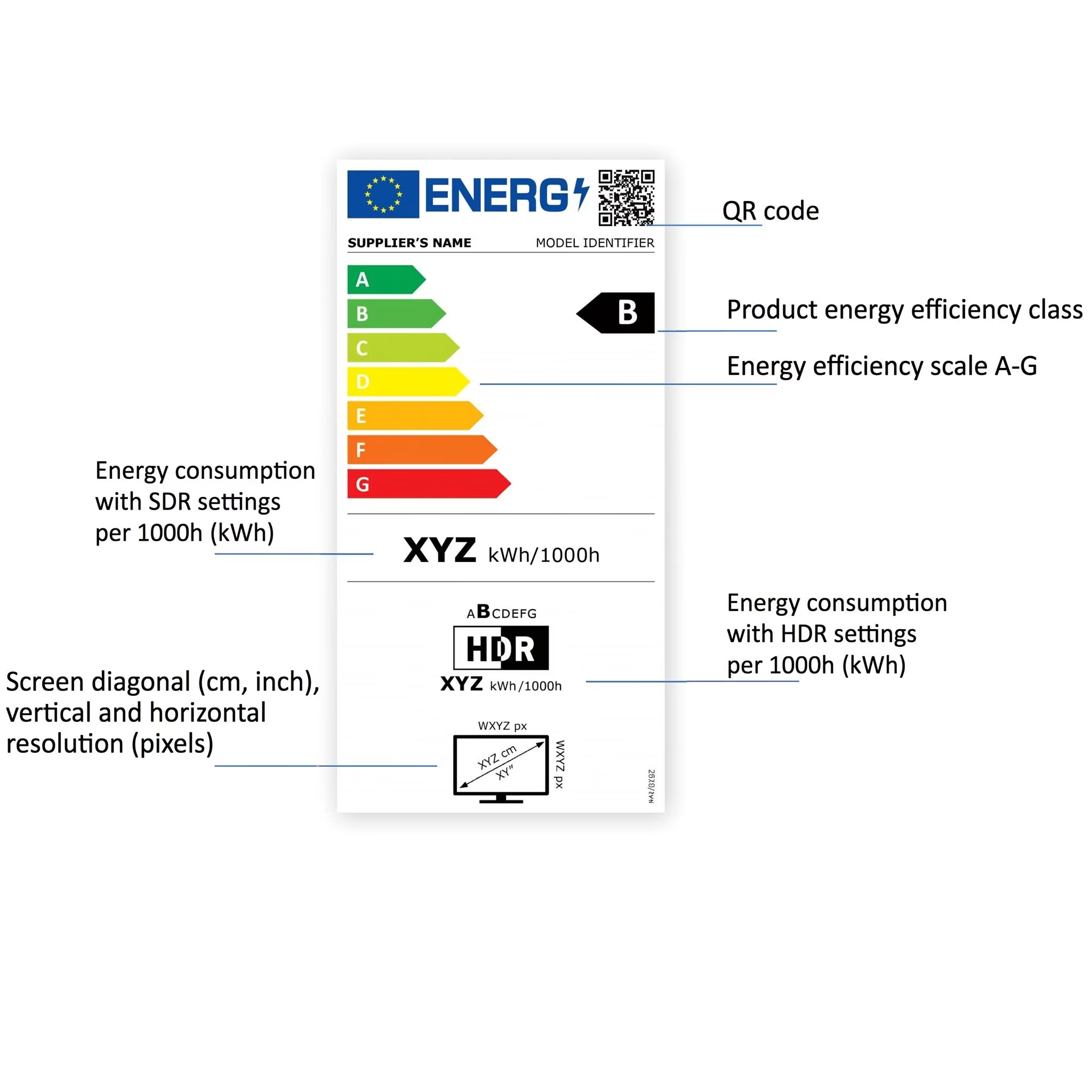
Calculate the cost of running your TV or display for 1000 hours: Multiply the kWh value shown on the device's energy label by your electricity price. For example, 64 kWh x €0.20 = €12.80.
Range Hoods
Scale: Old energy label, A+++ – D
Classes in use: A++ – D
Recommended energy-efficient classes: A++, A+, and A
How the energy class is determined: The energy label for range hoods shows electricity consumption at the point of best efficiency, in standby mode, in off mode, and the electricity consumption of the range hood's lighting system. The calculation assumes daily fan operation of 60 minutes and lighting operation of 120 minutes.
Additional label information: The energy label also shows the range hood's lighting efficiency class, grease filtering efficiency class, and fluid dynamic efficiency (fan power class) on a scale of A-G, where A is the best and G is the worst. In addition to the above, the label provides information about the appliance's noise level in decibels.
Example consumption: An A++-rated range hood may consume 11 kWh per year, while a D-class range hood may consume 63 kWh per year.
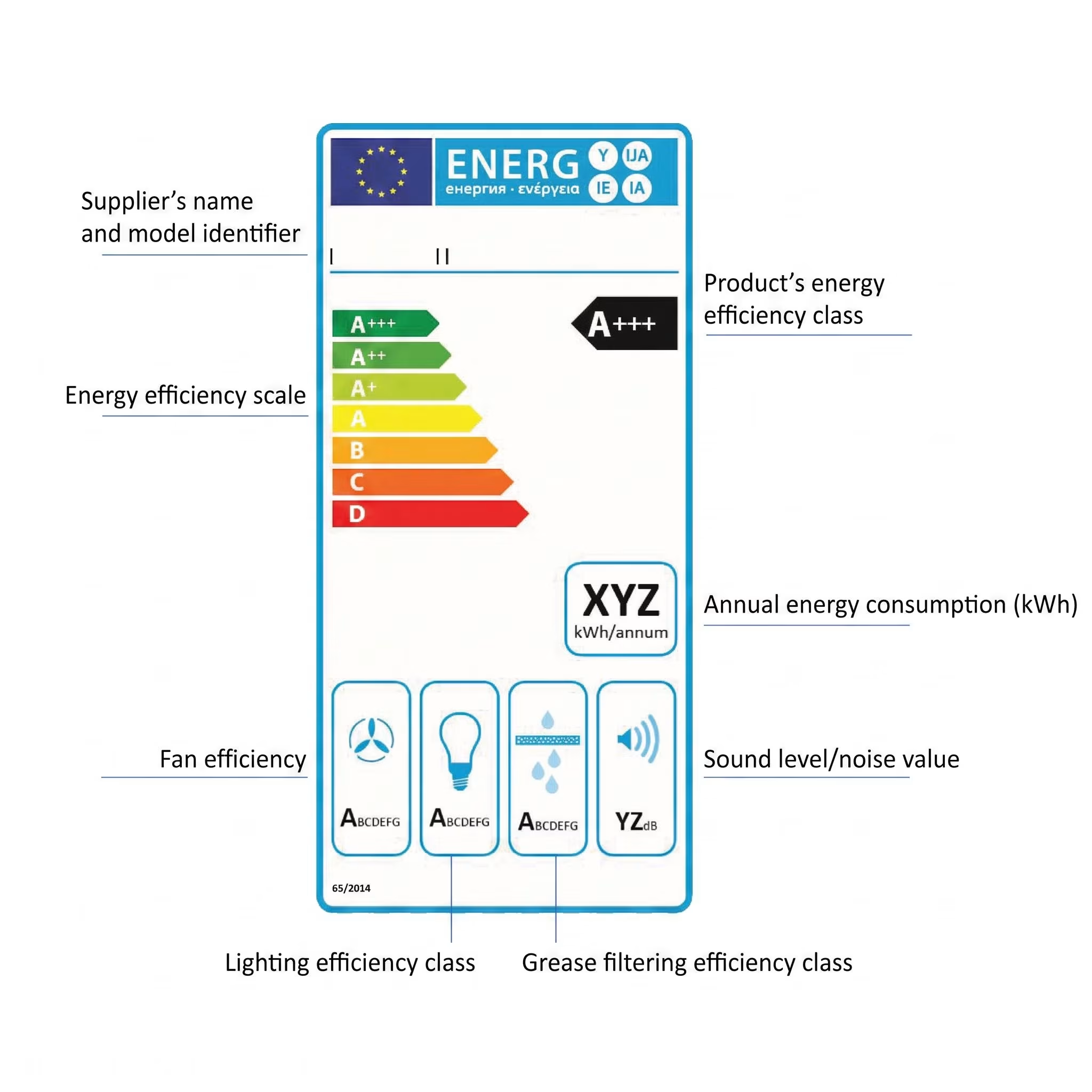
Calculate the annual cost of your range hood: Multiply the kWh value shown on the appliance's energy label by the price of electricity. For example, 11 kWh x €0.20 = €2.20.
Ovens
Scale: Old energy label, A+++ – D
Classes in use: A++ – D
Recommended energy-efficient classes: A++ and A+
How the energy class is determined: The energy label shows the oven's energy consumption with top or bottom heat function and separately with convection function during one standardized cooking cycle.
Additional energy label information: The oven energy label also shows the oven cavity's usable volume in liters.
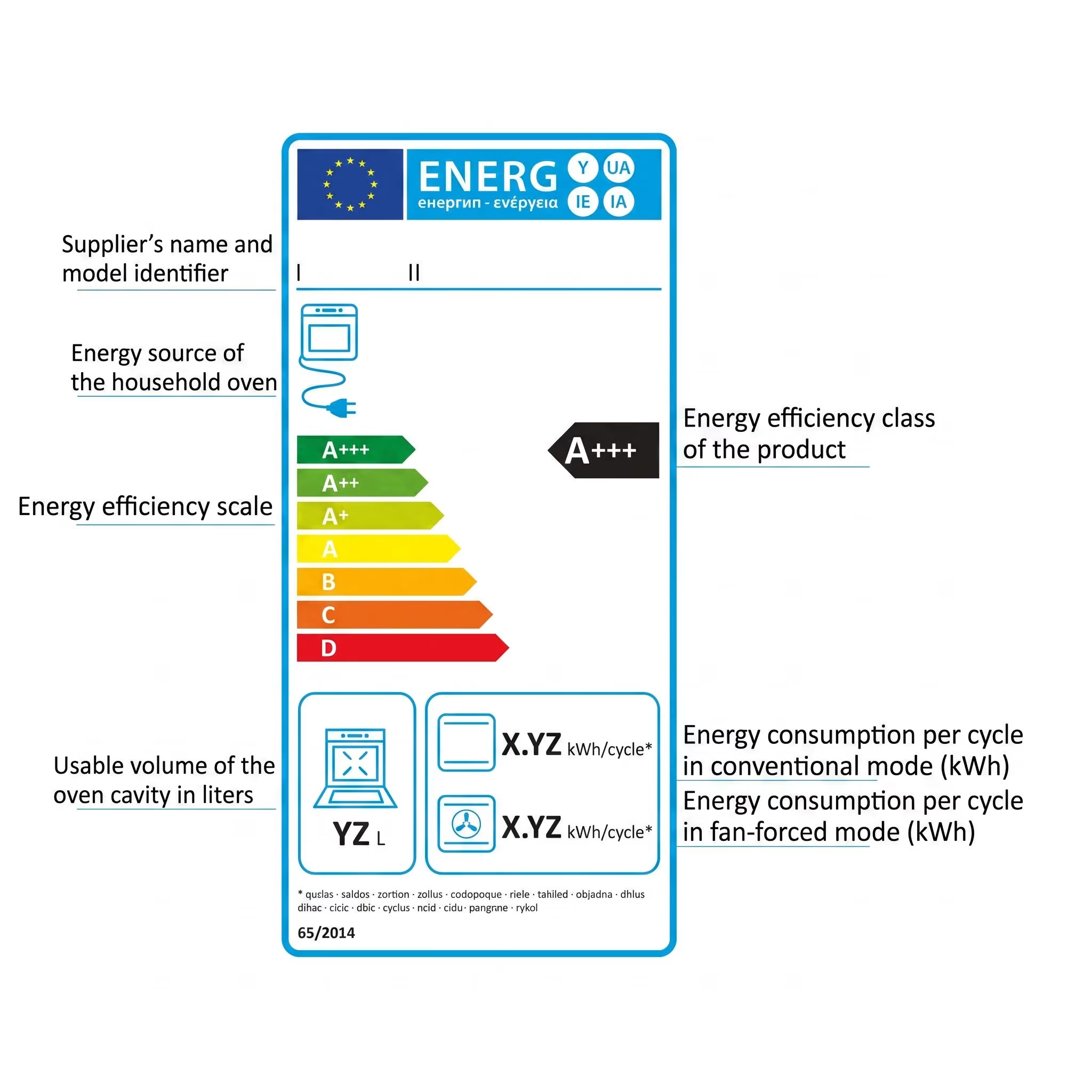
Example consumption: An A+-rated built-in oven may consume, for example, 0.9 kWh per cooking cycle with conventional heat and 0.69 kWh with convection, while an A-class oven may consume 1.09 kWh with conventional heat and 0.8 kWh with convection per cooking cycle.
You can get the most up-to-date information from the Energy Authority
The Finnish Energy Authority is responsible for national communication regarding the rescaling of energy labels. Read more at energiamerkinta.fi (Ulkoinen palvelu) (Avautuu uuteen välilehteen).
Give us feedback – was this article helpful?
We’d love to hear from you! Rate this article on a scale of 1–5 and let us know how we could make it even better.
Give feedback (Ulkoinen palvelu) (Avautuu uuteen välilehteen)