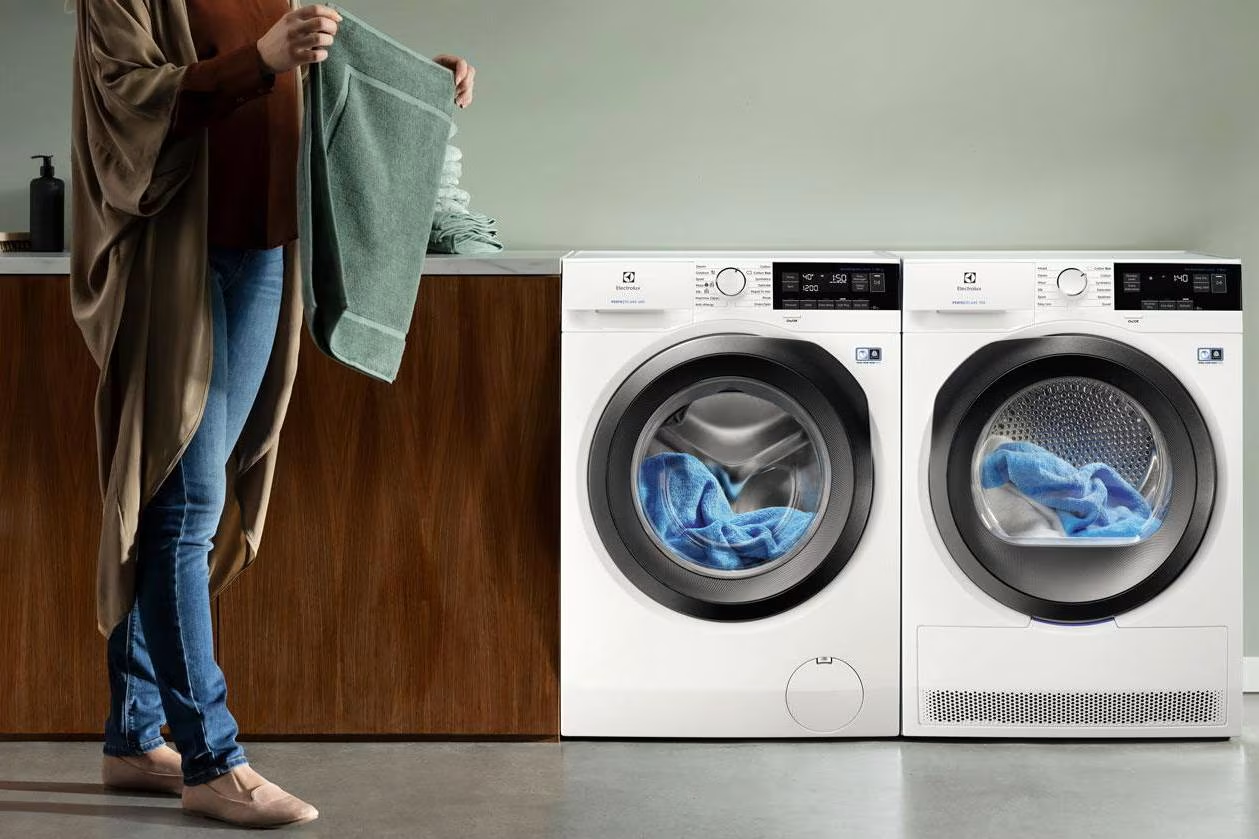
Washing Machine Buying Guide – Which One is Right for Your Home?
Updated 8/14/2024
A washing machine is a basic necessity in almost every household. When it's time to buy your first one or replace an old machine, today's selection can be overwhelming—there's a huge variety of washers available with all kinds of amazing features. Read this guide to learn what to consider when choosing a washing machine and whether you should spend a little or a lot. We hope this guide helps you find the best washing machine for your household's needs!
Washing Machine Comparison – Differences Between Price Ranges
When shopping for a washing machine, you might wonder what drives the price differences. Generally speaking, budget washing machines are best suited for small households, as they typically have smaller load capacities and are often physically more compact, making them easier to fit into even the smallest bathrooms. They're also usually very simple to use, without any special programs, smart features, or automation. They have traditional carbon brush motors and don't come with extended motor warranties.
If you're willing to spend more on a washing machine, you'll typically get a unit with a higher-quality motor backed by a long warranty when you register the machine. You'll also get more powerful spin speeds, so your laundry dries faster, and in addition to basic programs, you'll have access to specialty programs and automation. The more you pay, the higher quality and longer-lasting the washing machine typically is.
Budget Washing Machine
Price range: under €400
Who is it for? Small households with 1–2 people.
Typical features:
- Load capacity: 5–7 kg
- Spin speed: 1000–1200 RPM
- Design type: both top-loading and front-loading models available, plus compact models for tight spaces.
- Motor: traditional carbon brush motor.
- Motor warranty: typically basic, around 2 years.
- Energy class: usually lower, but A-class machines are also available.
- Programs: usually basic programs and quick wash. May not include specialty programs, smart features, or automation.
Mid-Range Washing Machine
Price Range: €400–800
Who is it for? Families and active use.
Typical Features:
- Capacity: 8–10 kg.
- Spin Speed: typically 1400 RPM.
- Body Type: mostly top-loading, but front-loading models are also available.
- Motor: brushless inverter motor or direct drive motor.
- Motor Warranty: 10–25 years when registered.
- Energy Class: mostly A-rated.
- Programs: more programs and smart features – steam, hygiene, and allergy programs, sensors, and some models include automatic detergent dispensing.
Expensive Washing Machine
Price range: over €800
Who is it for? Those who value quality and longevity.
Typical features:
- Load capacity: 9–11 kg.
- Spin speed: 1400–1600 RPM.
- Drum type: almost exclusively front-loading.
- Motor: brushless inverter motor or direct drive motor.
- Motor warranty: 10 years.
- Energy class: almost always A-rated.
- Programs: in addition to basic and specialty programs, automatic dispensing and comprehensive smart features.
Key Selection Criteria – What's the Best Washing Machine for Your Household?
The best washing machine for you might not be the same as for someone else. Above all, choosing a washing machine depends on what kind of home you have and what you'll be using it for. That's why the three most important selection criteria when buying a washing machine are the machine's size and placement, type and loading method, and desired capacity. If the space available for the washing machine is very limited, your options for other criteria may also be limited, as smaller washing machines often have fewer extra features.
Washing Machine Size and Type – Front-Loading or Top-Loading?
There are essentially two types of washing machines: front-loading and top-loading. However, there are size differences within these types too, so when buying a washing machine, first measure the space available so you can choose the most suitable one for your bathroom.
Front-loading washing machines are almost always 60 cm wide, while top-loading machines are 40 cm wide, making a top-loading machine the only option for narrow spaces. If you want to save space depth-wise, there are now also slim front-loading washing machines available that are shallower than full-size front-loaders, though their depth can vary somewhat depending on the model.
Keep in mind that smaller washing machines usually have a smaller drum, meaning less laundry can be washed at once, making them best suited for smaller households of 1–2 people. Top-loading washing machines in particular are typically very simple and don't have many special features.
Which Type of Washing Machine for Which Purpose?
Full-size front-loading washing machine: For larger households, such as families, and standard-sized bathrooms. Choose this if you're also planning to get a tumble dryer that will be placed on top of the washing machine. Front-loading washing machines →
Slim front-loading washing machine: For smaller households of 1–2 people and tighter bathrooms that can fit a standard 60 cm wide washing machine but have less space available depth-wise. Special-size washing machines →
Top-loading washing machine: For smaller households of 1–2 people and tighter bathrooms that can only fit a narrower, 40 cm wide washing machine. Note that the door of a top-loading washing machine opens upward, so it requires some space above the machine. Top-loading washing machines →
Compare the Sizes of Different Washing Machine Types:
| Machine Type | Full-size front-loading | Front-loading slim model | Top-loading |
|---|---|---|---|
| Width | approx. 60 cm | approx. 60 cm | approx. 40 cm |
| Height | approx. 85 cm | approx. 85 cm | approx. 85–90 cm (door closed) |
| Depth | approx. 55–60 cm | approx. 33–52 cm | approx. 60 cm |
| Capacity | 8–10+ kg | 5–7 kg | 5–7 kg |
| For Whom? | Families and standard-sized bathrooms | 1–2 person households and tight bathrooms | 1–2 person households and tight bathrooms |
The table shows the typical size range, capacity, and intended use for different washing machine types. Exceptions may occur outside these ranges.
Washing Machine Programs and Additional Features
Even budget washing machines include the basic programs listed below, while more expensive models offer a variety of specialized programs.
Basic Washing Machine Programs:
- Cotton (Colored Wash): The everyday workhorse for durable textiles, with adjustable temperature settings.
- Eco 40–60: The machine automatically selects the temperature based on load size to optimize energy and water consumption. While this program can take 3–5 hours, it's the most economical option.
- Synthetics: Designed for polyester and nylon garments, with mechanics that fall between cotton and delicate cycles.
- Wool / Hand Wash: For machine-washable wool and merino wool, using low temperatures and gentle drum rocking motion. Note that wool programs require a smaller load size.
- Delicates: For delicate fabrics, using plenty of water and gentle spinning.
- Quick Wash: A fast cycle, usually around 30 minutes, for lightly soiled laundry.
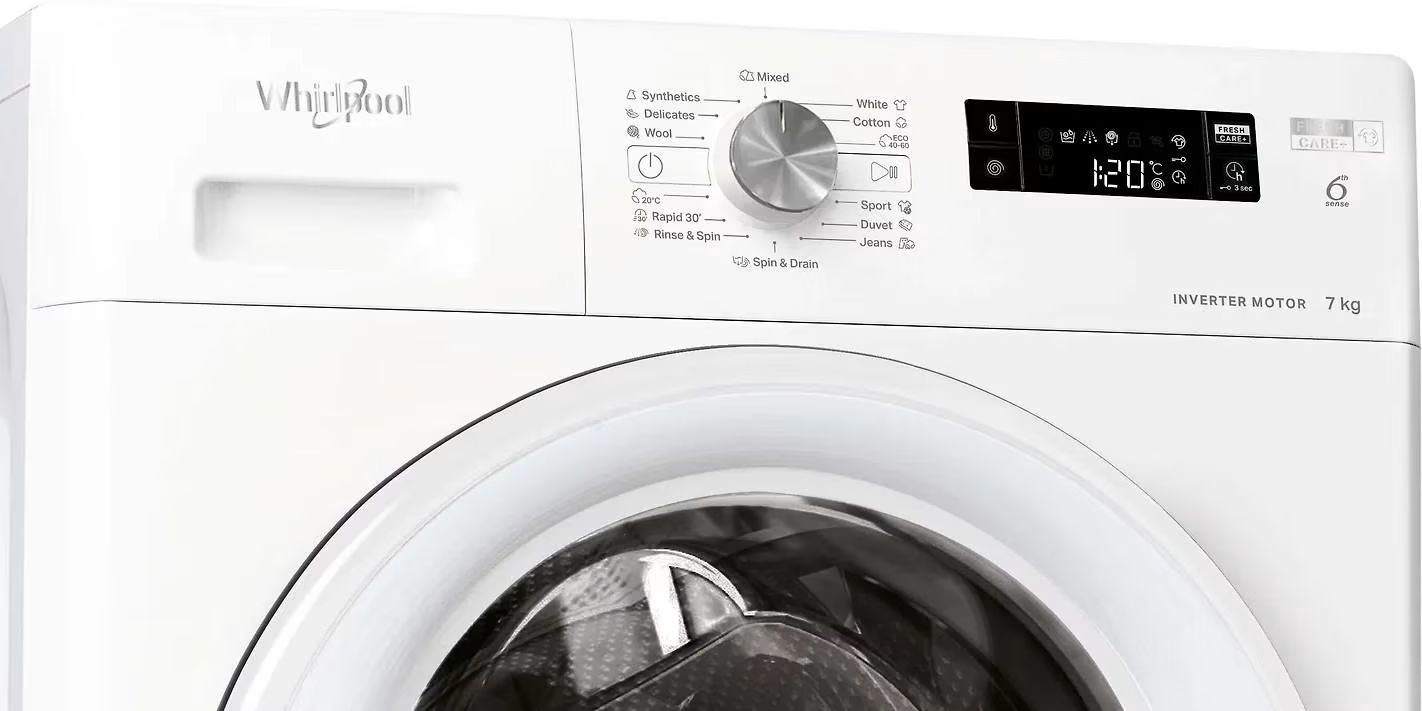
Specialized Washing Machine Programs
While budget models stick to the basics, spending more gets you additional programs and features.
Beyond the basic programs, some washing machines include:
- Denim Program: Specifically designed for jeans, using lower temperatures, reduced spin speeds, and more water.
- Sports/Outdoor Wear Program: For technical athletic and outdoor clothing, using more water with limited spinning.
- Allergy/Hygiene Program: Uses higher temperatures and intensive rinsing to remove detergent residue, allergens, and bacteria.
- Steam Program/Function: Steam doesn't actually wash but refreshes clothes with steam. It opens fibers, removes odors, and reduces wrinkles by up to a third, eliminating or simplifying ironing.
- Time Adjustment: Features like Electrolux's TimeManager let you adjust program duration based on how dirty your laundry is and your schedule. It shortens the cycle when full washing power isn't needed.
- Accelerated Wash: Technologies like LG's TurboWash or Samsung's QuickDrive speed up wash cycles without compromising results. Each uses proprietary technology to reduce wash time while maintaining cleaning performance.
Technical Features of Washing Machines
Beyond wash programs, pay attention to technical specifications when choosing a washing machine, such as spin speed, motor type, noise level, and smart features.
Washing Machine Spin Speed
Spin speed is measured in revolutions per minute (RPM). The higher the RPM (e.g., 1400–1600), the drier your laundry will be after washing, which means shorter drying times. Lower spin speeds are gentler on fabrics. Washing machine spin speeds typically range from 1000–1600 RPM, and even if your machine has a maximum spin speed of 1600 RPM, programs designed for delicate textiles use lower spin speeds for gentler care.
Washing Machine Motor – Brushed or Brushless?
Washing machines use three main types of motors, which vary by price range.
1. Traditional brushed motor. Found in budget washing machines, this motor type uses two small carbon brushes that press against the rotating part of the motor and gradually wear down. These are consumable parts that eventually need replacing. The drum is driven by a belt, which increases noise and vibration. Washing machines with brushed motors typically don't come with extended motor warranties—just the standard warranty, usually two years. Washing machines with brushed motors →
2. Brushless inverter motor. This is the most common motor type in mid-range and premium washing machines. It uses permanent magnets and electronic control instead of carbon brushes. Brushless inverter motors are quieter and more energy-efficient than brushed motors. Manufacturers often offer extended warranties of 10 years, or in Miele's case, up to 25 years when you register the appliance after purchase. Washing machines with brushless inverter motors →
3. Direct Drive motor: Direct drive washing machines are available in both mid-range and premium models. This is the most advanced version of the brushless motor, where the motor is attached directly to the drum shaft, eliminating the belt and reducing the number of moving parts. Currently, only LG washing machines use direct drive technology. LG offers a standard 10-year motor warranty (without registration) on their direct drive washing machines. Washing machines with direct drive motors →
Washing Machine Noise Level
Noise level can be an important factor if you live in an apartment building or if your washing machine needs to be placed in an open-plan kitchen instead of a bathroom. Noise levels are measured in decibels (dB), and since spinning is louder than washing, the energy label shows the spin cycle noise level and its noise class on a scale from A–D, where A is the quietest.
Noise level is affected by factors like motor type, spin speed, and various noise-dampening technologies. Brushless motors are significantly quieter than brushed motors. Higher spin speeds produce more noise, though the spin cycle only lasts a small portion of the total wash program, and more effective spinning leaves your laundry drier. Premium washing machines especially feature smoother operation with less vibration.
Typical washing machine noise levels:
- Wash cycle: typically around 50–55 dB.
- Spin cycle: typically around 70–78 dB.
While the differences may seem small, even 2–3 decibels is noticeably different in everyday use.
Smart Features and Automation in Washing Machines
WiFi and App Control
Smart features don't necessarily make a washing machine wash better, but they add flexibility to your daily routine. If you get a WiFi-enabled washing machine, you can connect it to your home WiFi network and control it through the manufacturer's app. Bosch, Siemens, LG, Samsung, Candy, and Miele all offer WiFi-enabled washing machines with their own dedicated apps.
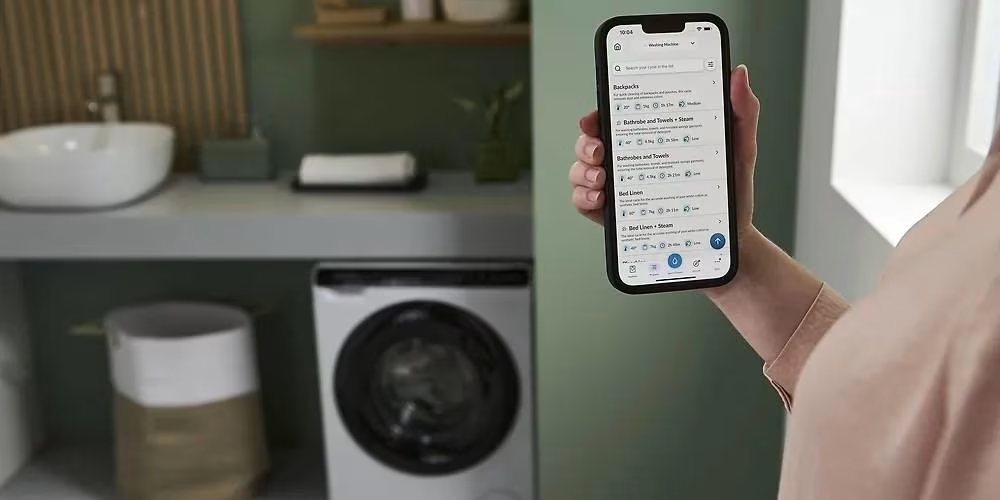
What can you typically do with a washing machine app?
- Start or schedule a wash program remotely from work or based on electricity prices if you use spot-priced electricity.
- View real-time energy consumption for different programs.
- Receive notifications on your phone when a wash program is complete, when detergent is running low in machines with automatic dispensing, or when the machine needs maintenance—some machines can even perform remote diagnostics, which speeds up service.
- Get help selecting the right wash program for your laundry.
Automation in Washing Machines
Beyond WiFi, modern washing machines are packed with automation features that improve wash results. Many machines can adjust water levels automatically, detect how dirty your laundry is based on water turbidity and extend wash time if needed, and identify different fabric types to adjust drum movements accordingly. This can save time, water, and energy while keeping your textiles in better condition.
Automatic detergent dispensing is a popular feature in washing machines today. These machines have larger detergent and fabric softener reservoirs that automatically dispense the right amount of each based on load size and water hardness, using weighing automation and sensors. This saves detergent and reduces detergent residue in your laundry, which benefits people with allergies and sensitive skin.
Learn more about smart appliance use here.
Washing Machine Energy and Water Consumption
A washing machine's annual energy consumption is relatively low, but over time you can save money by paying attention to the energy class when choosing a machine and using lower temperatures or the eco program. That's because 80–90% of a washing machine's electricity consumption goes toward heating water. This is why the eco program uses less electricity, even though it may take much longer than other programs.
Energy and water consumption also depend on how often you do laundry. It's worth washing clothes only when they're actually dirty, not after every wear, which also helps your textiles last longer.
Read here about how to interpret washing machine energy classes and how much energy and water a washing machine uses.
What is a washer dryer and who is it for?
A washer dryer is exactly what the name suggests—a combination of a washing machine and a tumble dryer. It's a handy appliance, especially in smaller apartments and cottages where there isn't room for two separate machines. Another advantage of a washer dryer is that you don't need to transfer laundry from one machine to another—the washer dryer dries your clothes after the wash cycle finishes. However, the appliance doesn't necessarily save time, as a combined wash and dry program can take several hours.
How a washer dryer works
- Washes and dries laundry
- Washes just as well as a regular washing machine
- Drying results may not be as good, and drying can take longer than in a separate tumble dryer
- Washes more laundry than it dries—for example, a machine with an 8 kg capacity washes 8 kg of laundry but effectively dries only 5 kg. Capacity is listed as 8/5 kg (wash/dry).
- A combined wash and dry program can take 3–6 hours.
- Lower energy rating—naturally, a combined wash and dry program uses more energy than a wash-only program.
Washer dryer with condenser or heat pump technology?
Like tumble dryers, washer dryers are available with condenser technology or heat pump technology, but condenser models are significantly more common.
- Condenser technology cools the condenser with water, which means the machine uses more water than a regular washing machine.
- Heat pump technology recycles heat, so water consumption is nearly the same as in a regular washing machine, and drying is more energy-efficient and gentler on fabrics.
Frequently asked questions about choosing a washing machine
Give us feedback – was this article helpful?
We’d love to hear from you! Rate this article on a scale of 1–5 and let us know how we could make it even better.
Give feedback (Ulkoinen palvelu) (Avautuu uuteen välilehteen)