Blender Buying Guide
The market offers a wide variety of blenders, with differences in power, programs, and jar types. This guide will help you find the perfect blender for your needs.
Intended use
The best blender for you depends on your specific needs. Do you mainly make smoothies and drinks, or do you want a more versatile appliance for making pastes, raw cake bases, sauces, nut butters, or puréed soups?
What kind of ingredients will you use? If your smoothies are mostly juice, fresh berries, and quark, almost any blender will work. But if you use frozen ingredients, pay attention to the power. A blender with at least 1000W usually has enough crushing power for tougher ingredients, allowing you to blend ice cubes and nuts in addition to frozen fruit.
Besides power, check the blades. A high-quality blade unit crushes more effectively and produces a smoother, silkier consistency.
Glass or plastic jar?
There are key differences between jar materials to consider when choosing a blender.
Glass jar:
- If the glass jar has a removable blade unit, it is dishwasher safe.
- Not all glass jars can withstand boiling hot ingredients, so check the heat resistance before blending items like pureed soups.
- Avoid sudden temperature changes when using a glass jar.
Plastic pitcher:
- The lightweight design of a plastic pitcher is a major advantage.
- Opt for a high-quality, durable pitcher, such as one made from Tritan.
- High-quality plastic is often more heat- and impact-resistant than glass.
- Choose a BPA-free pitcher to ensure maximum safety.
At home or on the go?
If you're making a breakfast smoothie for your commute or a recovery drink for your gym bag, consider a blender that lets you blend directly into a travel bottle. Many blenders now come with bottles featuring their own blade assemblies. Once blended, simply swap the blades for a lid and you're ready to go. When using these extra bottles, check their durability for crushing ice or frozen berries and ensure the blades are up to the task.
Power and motor
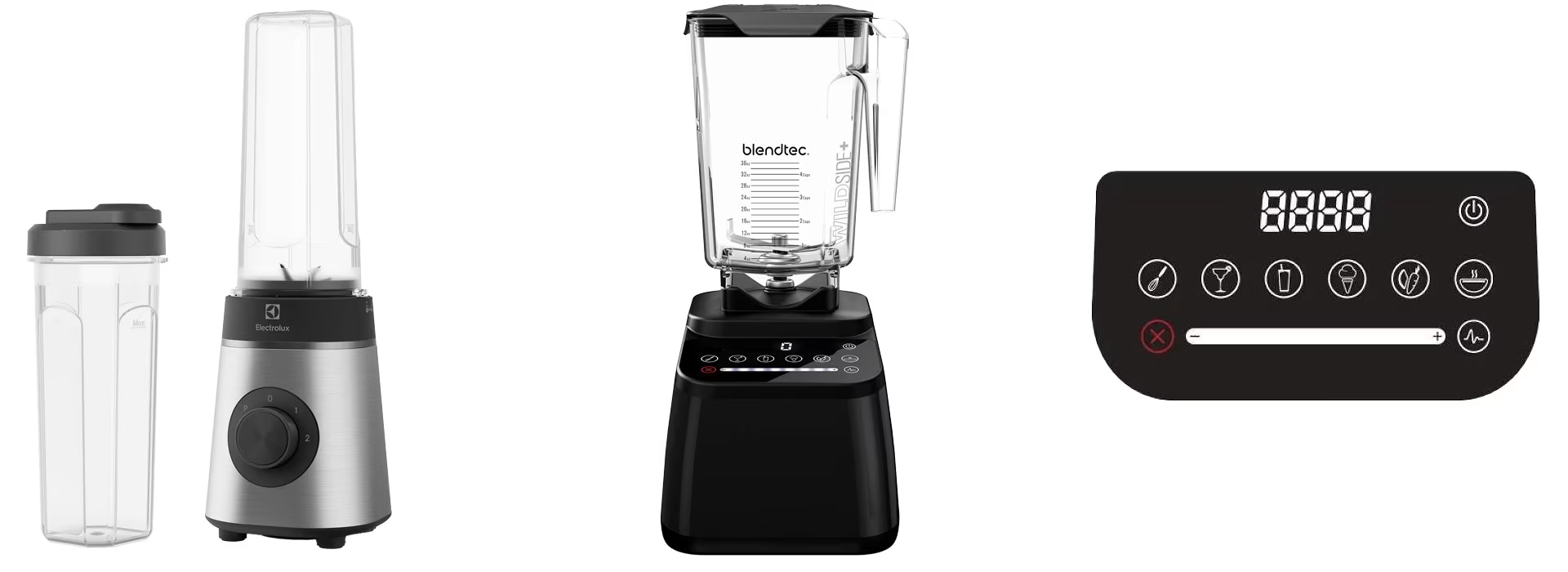
When exploring blender settings and programs, check if the blade speed is adjustable. Blade speed significantly impacts the blending of different ingredients, and varying it helps achieve the best results. For example, when crushing frozen ingredients, start at a low speed and gradually increase it. Harder ingredients may require high speeds toward the end of the process.
High-speed blenders feature professional-grade motors capable of at least 22,000 RPM. While standard blenders need a break after a few minutes of heavy use, pro-grade motors are designed to run for extended periods without overheating. This allows you to make pureed soups without pre-boiling the ingredients, as the high rotation speed heats the soup until it's steaming hot.
Verkkokauppa.com recommends
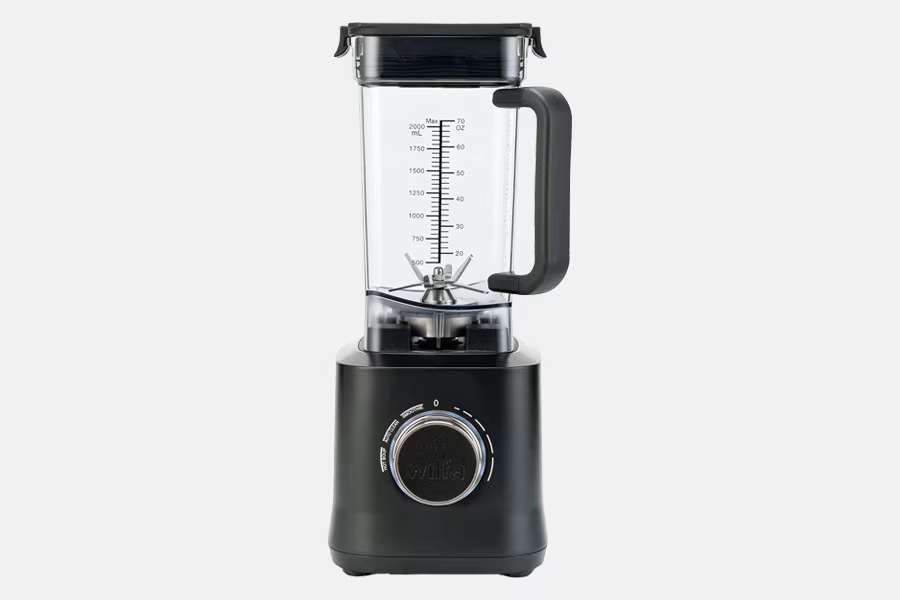
When choosing a pitcher size, keep in mind that the actual blending capacity is usually about half of the total volume. For example, if you want to make 700 ml of smoothie, choose a 1.4-liter pitcher.
Features
Some blenders feature pre-set programs that automatically adjust speed for optimal results. While standard models typically include settings for smoothies and ice crushing, high-performance blenders also offer dedicated programs for sauces and soups.
High-quality blenders often include a pulse function. This handy feature momentarily boosts the speed to maximum, making blending easier and improving ice-crushing performance.
Give us feedback – was this article helpful?
We’d love to hear from you! Rate this article on a scale of 1–5 and let us know how we could make it even better.
Give feedback (Ulkoinen palvelu) (Avautuu uuteen välilehteen)