Electric bike buying guide: How to choose the right model for your needs
Article updated July 23, 2025
Electric bikes (e-bikes) are a common sight on the roads today. It’s no surprise—they’re faster and more comfortable than traditional bicycles. Compared to driving, e-bikes are a much more eco-friendly and cost-effective way to get around, while also offering significant health benefits. With so many models available for different needs and preferences, this guide will help you find the perfect e-bike for you.
How e-bikes work
Electric-assist bikes work by combining motor power with pedaling. The motor starts when you begin pedaling and stops when you stop or reach the maximum speed.
Many e-bikes allow you to adjust the assistance level. If you want to commute in work clothes without breaking a sweat, set it to maximum. If you want a workout, you can set it to minimum or turn it off entirely. A flat battery won't stop you, as an e-bike works just like a regular bicycle without motor assistance.
E-bike speed and regulations
According to EU law, e-bikes are limited to 25 km/h. If an electric vehicle exceeds this speed or has a power output over 1000 W, it is classified as a moped, requiring type approval, insurance, registration, and a driver's license. Verkkokauppa.com does not sell such vehicles.
E-bike insurance – what you need to know
E-bikes with a maximum power of 250 W, where assistance only works while pedaling and cuts out at 25 km/h, do not require insurance. By law, insurance is required for e-bikes under 1000 W that weigh over 25 kg and can operate without pedaling but cut out at 25 km/h. However, Verkkokauppa.com does not carry these, and they are rare on the market in general.
E-bike comparison – find the right model
E-bikes come in a wide range of prices and styles, with varying battery capacities and technology. What should you consider when buying a new e-bike? There are models for almost every use, from city bikes to mountain and road bikes. While commuter e-bikes are the top sellers, mountain bikes—especially fatbikes with wide tires—are growing in popularity.
E-bikes for commuting and daily use
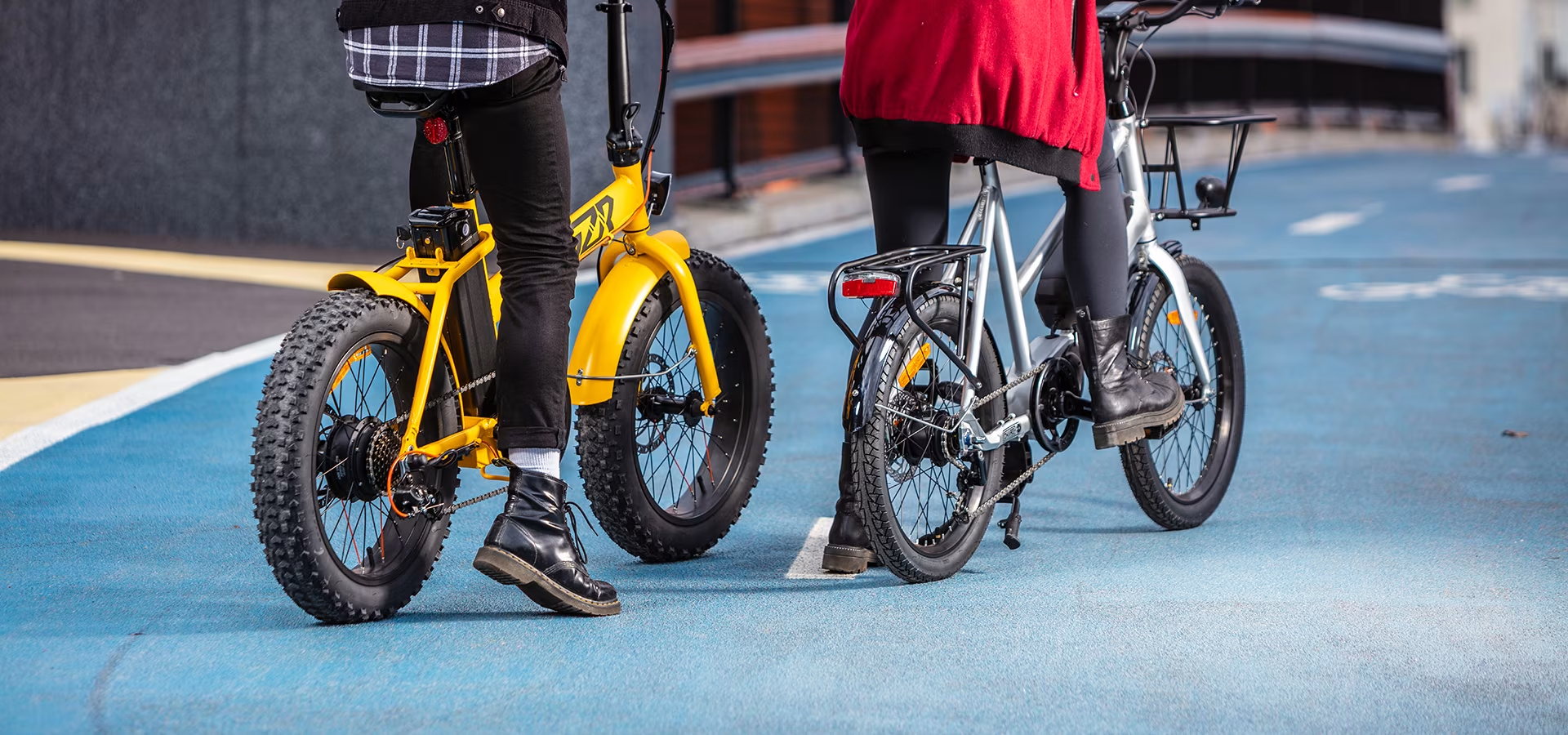
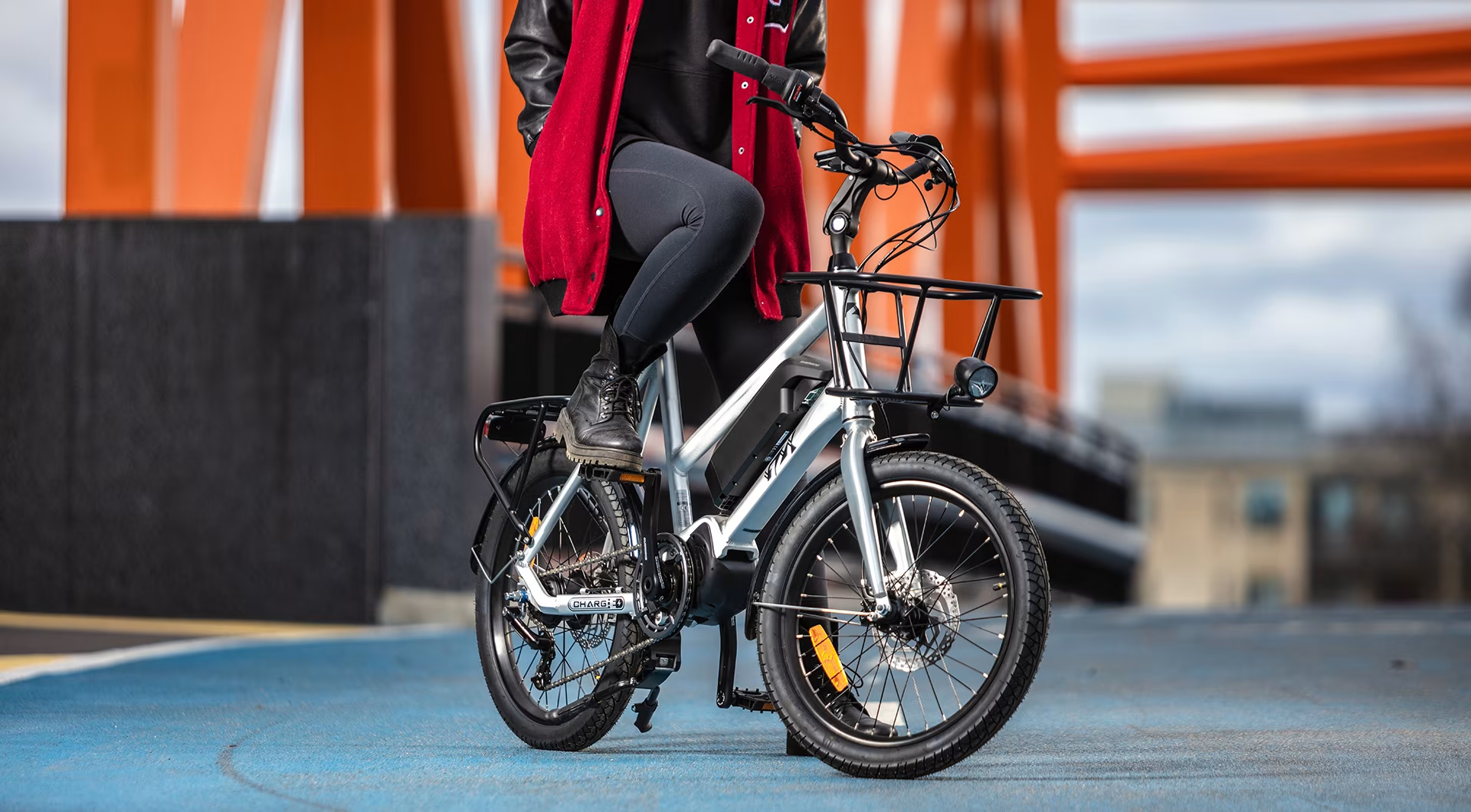
For commuting or daily errands, an e-bike similar to a traditional hybrid is a great choice. Models range from casual city cruisers to high-speed options. Investing more gets you a larger battery for longer range and better features, such as integrated lights and fenders. Higher-end models also offer improved motor quality in terms of torque, weight, and pedaling feel.
Interested in a company bike?
If you already cycle to work, you should take advantage of the company bike benefit—provided your employer offers it. If they don't, our company bike guide provides both information on the benefit and arguments to help you convince your employer!
Electric fat bikes for year-round cycling on all terrains
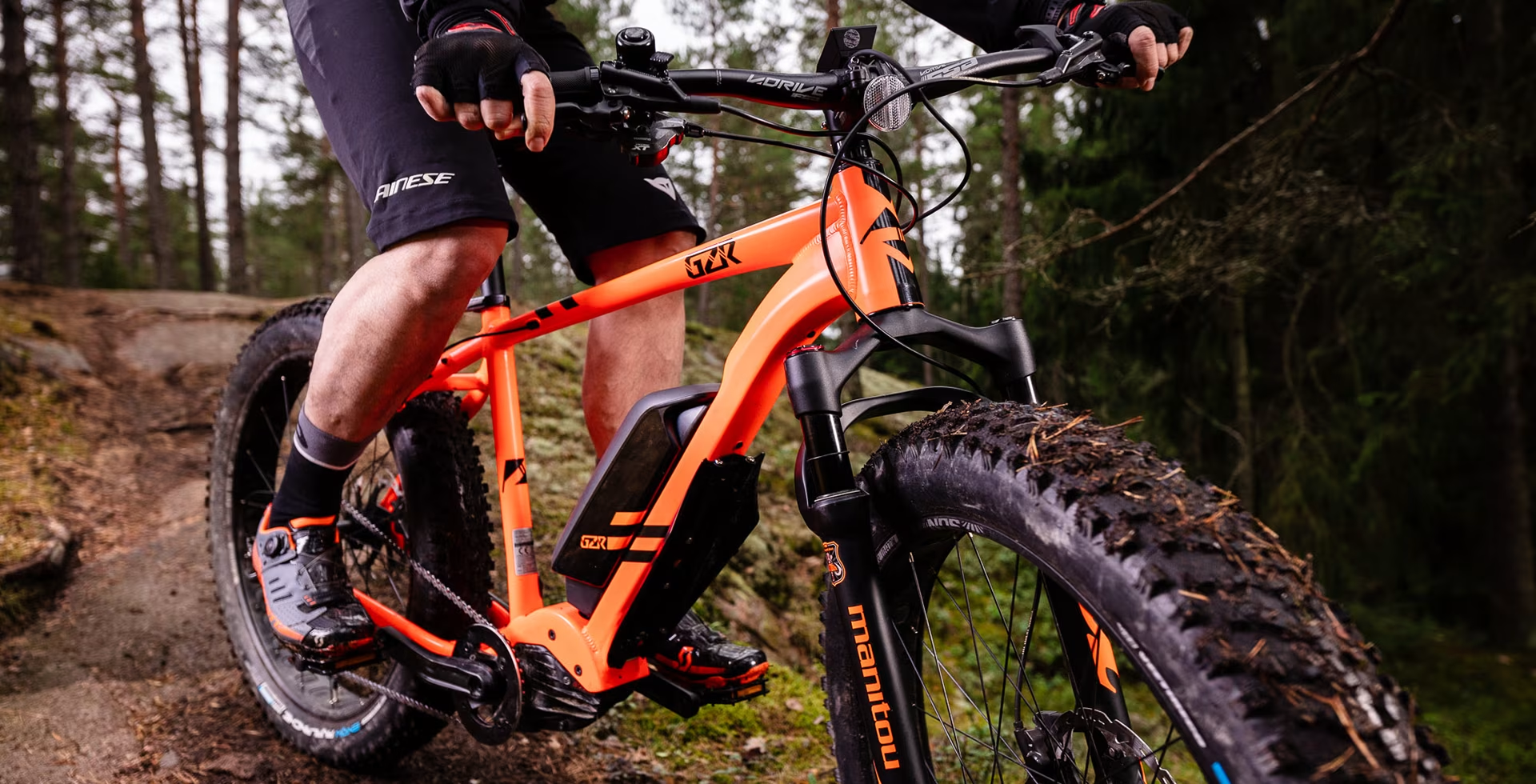
A fat bike is a mountain bike equipped with extra-wide tires, designed to handle almost any terrain. With an electric fat bike, you can effortlessly glide through snow, mud, and even cobblestone city streets. This versatility is why Verkkokauppa.com’s own GZR electric fat bikes have been among our most popular models for years.
Electric mountain bikes for hobbies and commuting
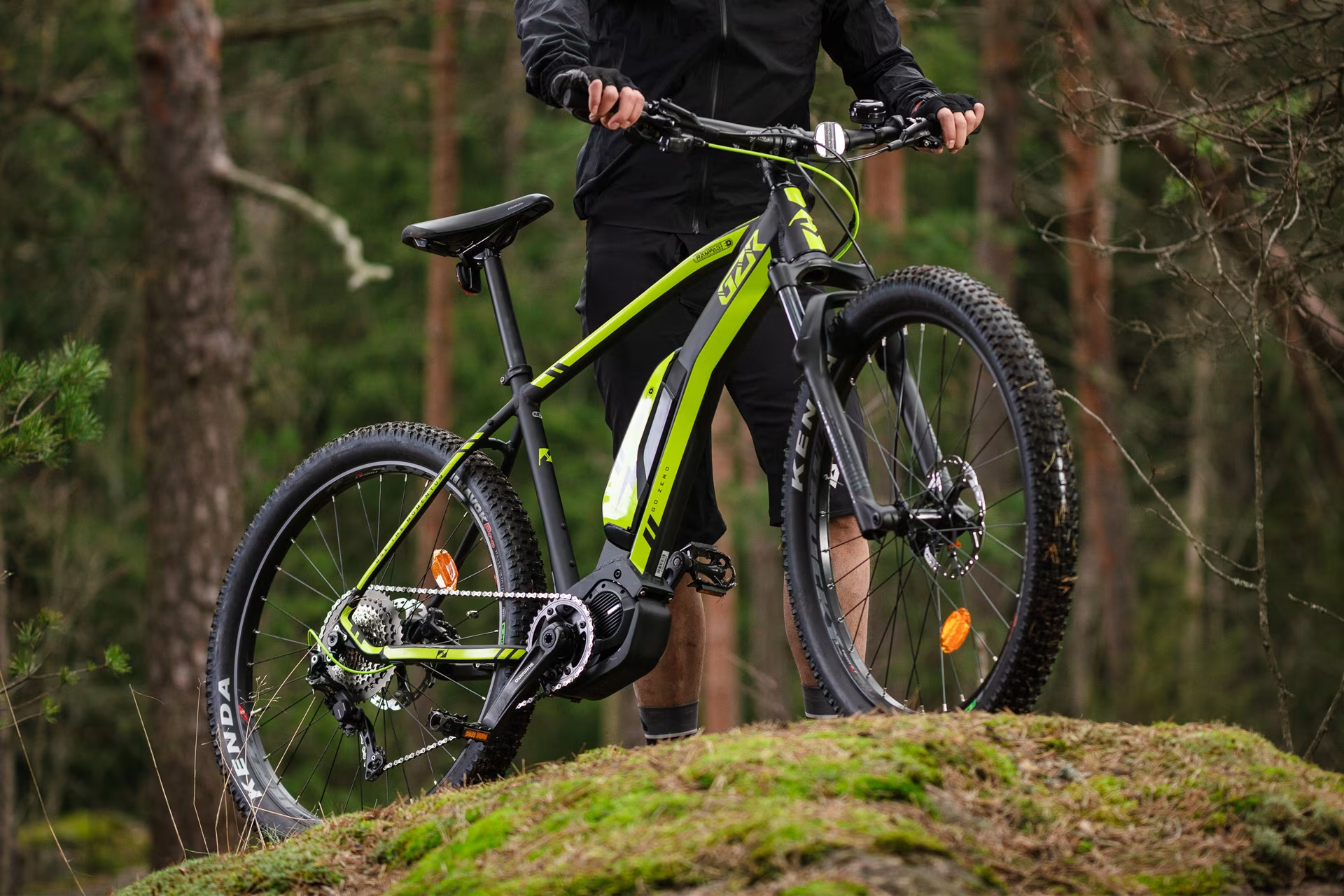
Electric mountain bikes have surged in popularity, particularly for recreational use. For example, many former enduro riders find that an e-MTB provides a sense of speed in challenging terrain comparable to a motorcycle, but without the maintenance costs. While you might think an e-MTB offers less exercise than a traditional mountain bike, the opposite is often true—you can ride harder and longer. The real advantage of an e-MTB is its versatility. While a standard mountain bike can feel heavy on asphalt, an electric bike handles everything from daily commutes to fast-paced forest trails with ease.
Electric mountain bikes are available in both full-suspension and hardtail models. The level of suspension determines comfort in rough terrain, but full suspension is also an advantage in the city as it reduces strain on your back.
Electric bike prices – how much should you spend?
Electric bike prices vary significantly, which can make choosing the right one difficult. While entry-level models start at €500, high-end bikes can exceed €10,000. At Verkkokauppa.com, our electric bikes typically range from €1,000 to €5,000. When choosing a bike, consider your budget and intended use, specifically the distances you'll be riding. Keep in mind that price and quality go hand in hand.
- The most affordable electric bikes are best for short distances due to their smaller battery capacity. Often, a high-quality battery alone can cost as much as, or even double, the price of the cheapest e-bike models.
- At around €2,000, you can find a high-quality electric bike suitable for both daily commuting and longer recreational rides.
In addition to the motor and battery, pay attention to other technical components. Drivetrains and brakes are crucial on any bike, and electric bikes are no exception.
Electric bike batteries – what is the range?
The battery and motor are the most critical components of an e-bike. Higher battery capacity means a longer range. With a 400–500 Wh battery, you can cover dozens of kilometers with motor assistance. However, range is affected by rider weight, temperature, and terrain. While a 500 Wh battery might need charging every 50 km under heavy use, it can exceed 100 km in optimal conditions. High-quality batteries provide more accurate range estimates (e.g., remaining kilometers on a display), last for more charge cycles, and use more consistent battery cells. Typically, e-bike batteries last for about 500–1,000 charge cycles.
Regardless of your choice, product safety is a top priority for all manufacturers. By following the manufacturer's instructions, you can safely charge batteries indoors.
Electric bike motors – a quality motor provides a more natural feel
Unlike other electric vehicles, an e-bike motor doesn't do all the work; the rider remains the primary power source. The motor's purpose is to assist during hill climbs, starts, and headwinds until you reach a comfortable cruising speed.
When the motor is working hardest, such as during off-road riding, average consumption is around 10 Wh/km. In Eco modes, the assistance mainly helps with acceleration and hills, keeping consumption as low as 3 Wh/km. In practice, 3 Wh/km is roughly equivalent to running a bike light for one hour.
Higher-quality motors offer more torque for starts and climbs, reducing the need for frequent gear changes as the motor compensates for physical effort. A premium motor also feels more natural, providing smooth power delivery without noticeable jerking. Motors from Shimano, the world's largest bicycle component manufacturer, are particularly renowned for their natural ride feel.
Major manufacturers like Shimano, Bosch, and Yamaha typically offer three tiers of motors, with the main difference being torque. Consequently, the most powerful models are often found in mountain bikes. Choosing a city bike with a better motor makes it more agile on hills, when carrying heavy loads, or when starting from a standstill. For example, if you plan to pull a child trailer, a high-torque motor is better suited for the increased total mass.
Give us feedback – was this article helpful?
We’d love to hear from you! Rate this article on a scale of 1–5 and let us know how we could make it even better.
Give feedback (Ulkoinen palvelu) (Avautuu uuteen välilehteen)