EV Charging Station Buying Guide
Published May 21, 2021
What should you consider when buying an EV charging station? Read this article to get answers to your questions.
Electric vehicle registrations have been rising rapidly in recent years. There's a wide selection of cars available, and the used electric vehicle market is also heating up.
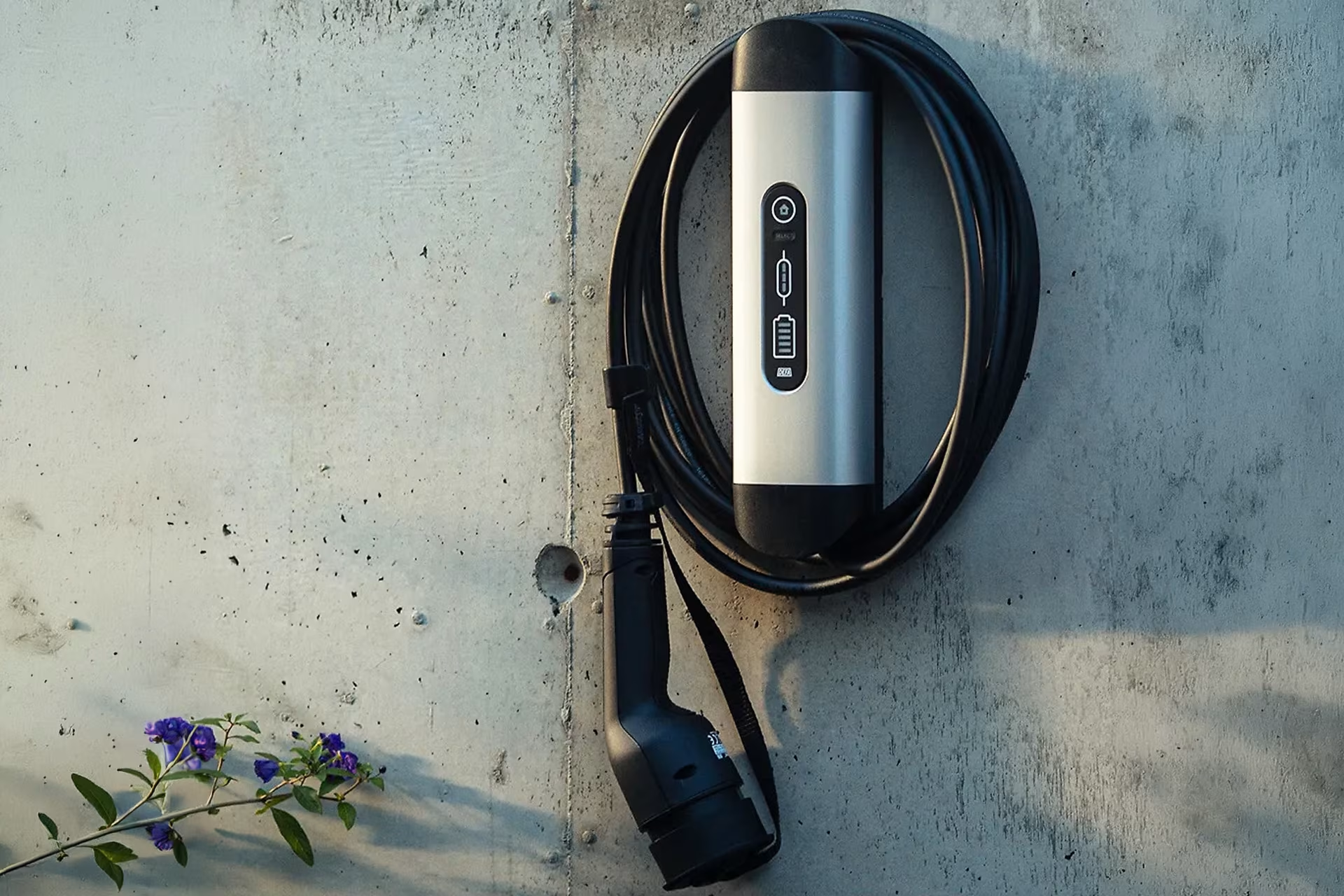
When you buy an electric car, it often comes with what's called a portable charging device. However, these aren't recommended for regular use, so it's worth getting a home charging station if possible. A charging station is an easy and safe way to charge your electric or hybrid car. When buying an electric car, make sure to set aside plenty of time to find a charging station that fits your home and vehicle needs.
Verkkokauppa.com offers a comprehensive selection of electric car charging stations and charging cables.
Choose your home charging station power based on your car, home, and driving habits
Electric vehicle charging stations are available in several different power classes. The most powerful can supply up to 22 kW of charging power to your car. A powerful charging station charges the battery faster, provided the car's charger and your home's electrical system can utilize the station's power. However, slower charging and a lower-power charging device often work just fine for home charging. Many electric cars sit in the driveway for about 15 hours a day anyway.
The onboard charger in your plug-in hybrid or electric vehicle determines the maximum possible charging power for home charging. For example, plug-in hybrids often have a relatively small battery capacity, and the car's charger can't utilize the power of a fast charging station. A smaller battery will still fully charge overnight even with slower charging. Your home's electrical system may also force you to use lower-power charging, even if the home charging station has more capacity.
Charging an electric vehicle places a sustained load on your home's electrical network, so before shopping for a charging station, you should find out what residual current devices (RCDs) and main fuses you have at home. Due to the load, safety considerations are extremely important. You should have a professional check your home's electrical connections before installing a charging station.
Electric vehicle home chargers often have a built-in residual current device (Type A or B) or DC fault current detection, for example. However, an electrician will always verify and, if necessary, install an adequate residual current device in the distribution board. Finally, the residual current device is tested to ensure it works.
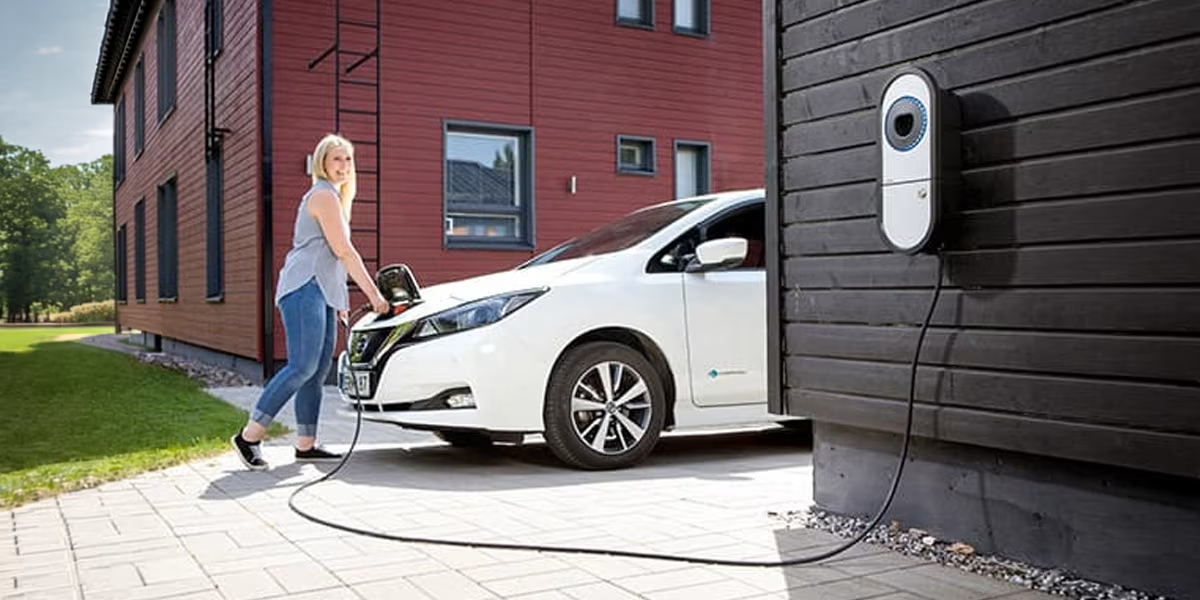
Your home electrical network's power determines whether you can charge your electric car at full power on a Saturday evening while the electric sauna heater is warming up and pizza is baking in the oven. If you try to charge your car with more power than your home's system allows, your home's fuses may blow. If the electrical network's power isn't sufficient, you may need to upgrade your home's main fuse to a more powerful one. However, this is an expensive project.
A much more practical solution is often to limit the power of the electric vehicle charging point to a level your home's electrical network can handle. Many car charging stations allow you to adjust the device's maximum power at least during installation, and charging power limitation may also be possible through the car. If your home's electrical network can't handle the planned charging station's power, your options are:
- Upgrading the main fuses
- Limiting charging power during installation. In some cases, you can also limit the charging station's power later directly from the station or through an app. Charging power limitation is often also possible through the car.
- Charging the car when the electrical network load is otherwise at its lowest. Some charging stations, charging apps, and cars also support scheduling.
- Installing active load management. Load management limits charging power depending on the power consumption of other electrical devices being used simultaneously.
When considering the charging station's power, you should take into account your car charger's characteristics, your home electrical network's load capacity, and your own driving habits. A lower-power charging station is often perfectly adequate, but if your car is on the road almost constantly, faster charging may be necessary.

Four different ways to charge an electric vehicle
- Charging Mode 1 (Mode 1) means connecting the electric vehicle's charging cable to a regular household outlet. Charging Mode 1 is particularly suitable for charging light and small electric vehicles, such as electric scooters. Before plugging a Mode 1 cable into a regular outlet, you should verify the outlet's safety.
- Charging Mode 2 (Mode 2) means charging the car with a temporary charging device, such as the portable charger often included with the car. As the name suggests, this charging mode is suitable for temporary charging. Mode 2 cables typically don't have a residual current device, which prevents potential problem situations. For temporary charging, you should reduce the charging power as low as possible to avoid problems. It's also good to check the outlet's condition with this charging mode.
- Charging Mode 3 (Mode 3) is the primary charging mode for electric cars, used at the car's permanent charging location, such as at home. With a quality, properly installed home charging device, charging your car is safe and easy. Most of the home charging stations in our selection represent Charging Mode 3.
- Charging Mode 4 (Mode 4) means fast charging an electric vehicle with a high-power DC charger. These high-power chargers are used especially at public charging points, for example at gas stations. Fast charging is convenient when traveling, for instance.
Once you've determined your home electrical network's power, you should turn your attention to the car. The appropriate charging mode and type for the car also affect the charging device selection. Electric vehicle charging modes are categorized as follows.
When choosing an electric car charging point, it can be smart to plan ahead
The internal charger in a plug-in hybrid or electric car determines the maximum power at which you can charge the car at home. Plug-in hybrids often use lighter single-phase charging, but new fully electric cars are increasingly equipped with three-phase charging.
When buying a charging station, remember that you can usually reduce the charging station's power, but not increase it. You should also consider your charging needs over a longer time period. If you plan to switch from a plug-in hybrid to a fully electric car in the future, it may make more sense to invest in a slightly faster charging station, even if the hybrid only uses single-phase charging. Your next car will likely be able to charge from the same charging station at a faster rate.
Home charging stations are available with both fixed and removable charging cables
When choosing a charging station, pay attention to the cable connection type. If the charging station doesn't include a cable, you also need to consider the station's charging connector. Most new electric cars are equipped with a Type 2 connector, but there are still many cars on the road with Type 1 connectors.
- Electric car home chargers are available with both fixed and removable charging cables. The advantage of a charging station with a fixed cable is convenience in daily use. You just need to drive your car next to the charging station, turn off the car, and plug in the cable. Additionally, a fixed cable is easy to keep clean because the station often has an integrated charging cable holder.
- A removable charging cable, on the other hand, ensures that you can replace the charging station's cable if needed, for example if the cable breaks for some reason or you need a longer charging cable. In some cases, you can also switch to a different type of cable on the charging station (e.g., Type 2-Type 1 cable).
- Another thing to consider is the charging cable length. You should grab a measuring tape and measure the distance from the planned charging station location to your car's charging port. Separately sold charging cables in our selection range from 3 meters to 10 meters in length. Cables included with charging stations are typically 4.5–7 meters long.
Decide on the charging station location well in advance
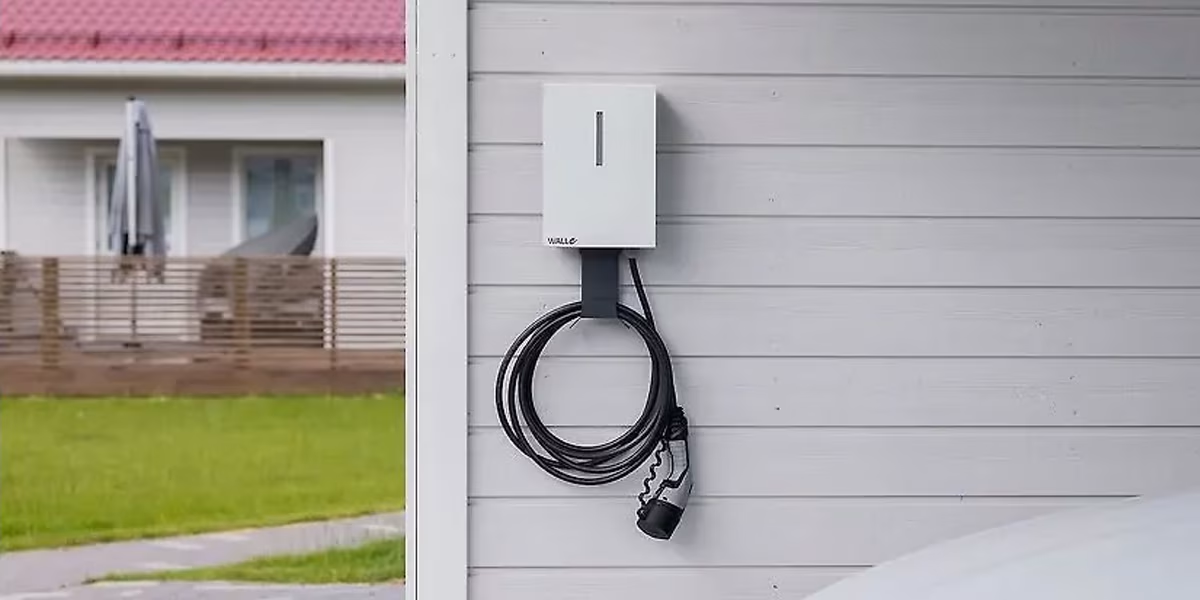
When shopping for a charging station, you should also consider the device's final location to choose the right cable length. You should also think about whether you want to install the device in a garage, on an exterior wall, or on a post, for example. Electric car charging stations can generally be placed either outdoors or inside a garage and can withstand varying weather conditions.
Leave home charging point installation and maintenance to professionals
Finally, it's good to return to safety matters. Because charging an electric car often places a sustained load on the electrical network, it also involves safety risks. Even though some charging stations don't require installation by an electrician, we recommend having the safety of outlets verified before using the device. Many outdoor outlets haven't previously been used for devices with this level of load, so charging a car may cause an overheating hazard, for example.
When purchasing a fixed home charging station, it's extremely important to check not only the fuse power but also the condition of your home's electrical network and the safety of the outlets being used. Charging station installation must be left to a professional electrician who has the appropriate qualifications and authorization. An electrician can also safely adjust the maximum power supply to suit both your car and home.
Note! Personnel who install, commission, and maintain charging stations must have the appropriate qualifications and authorization to work with electrical systems. This professional electrician is fully responsible for compliance with applicable installation rules and regulations.
Give us feedback – was this article helpful?
We’d love to hear from you! Rate this article on a scale of 1–5 and let us know how we could make it even better.
Give feedback (Ulkoinen palvelu) (Avautuu uuteen välilehteen)